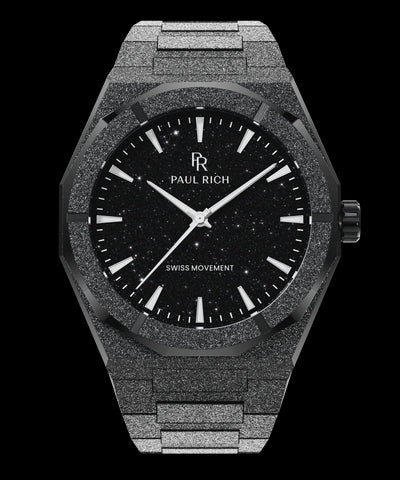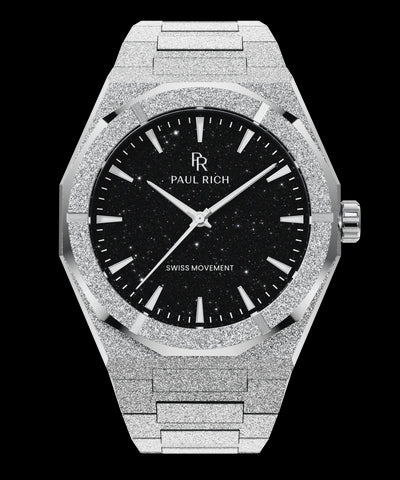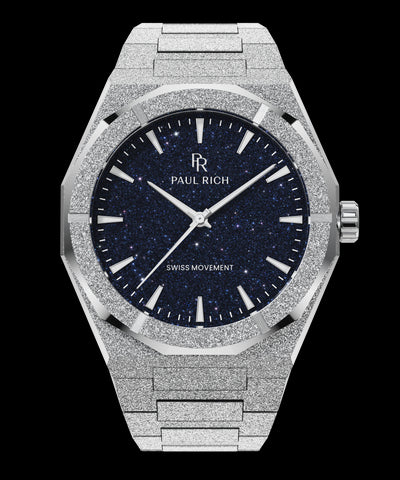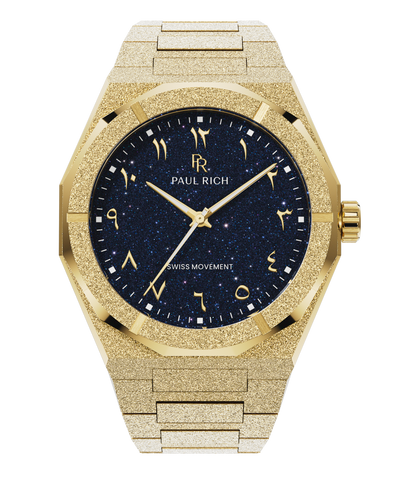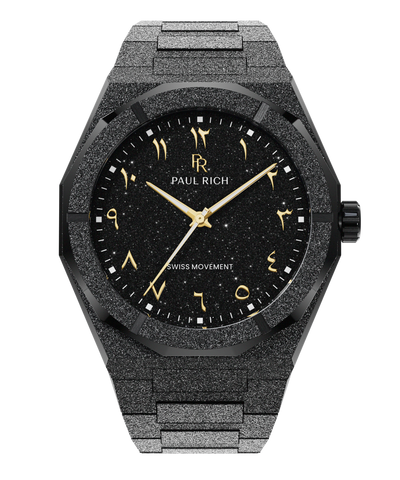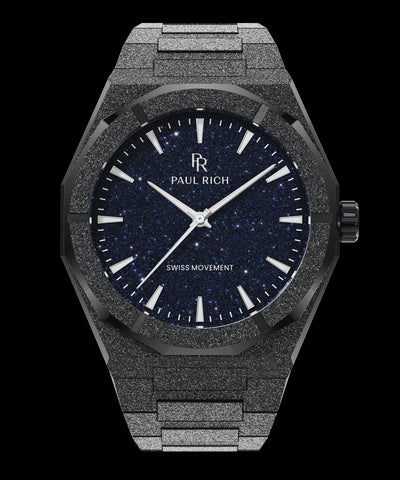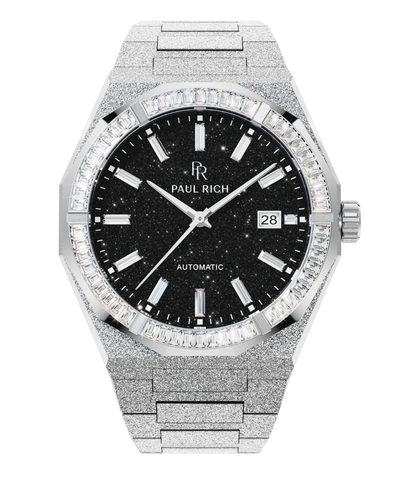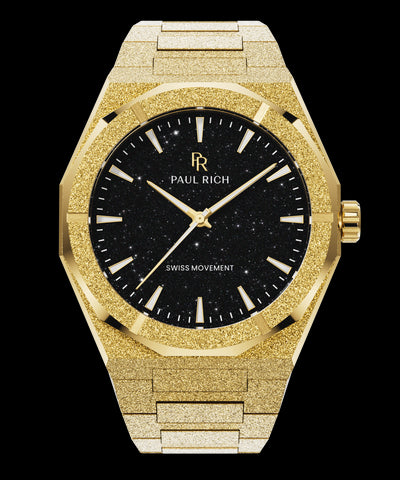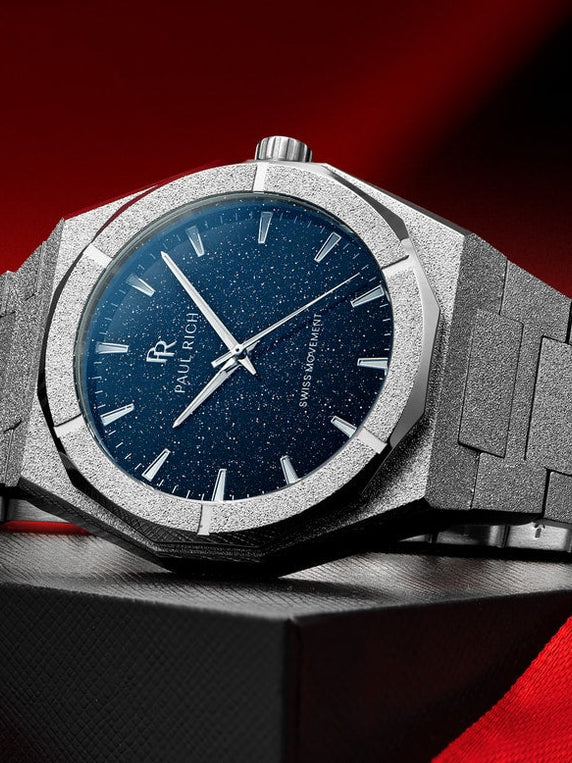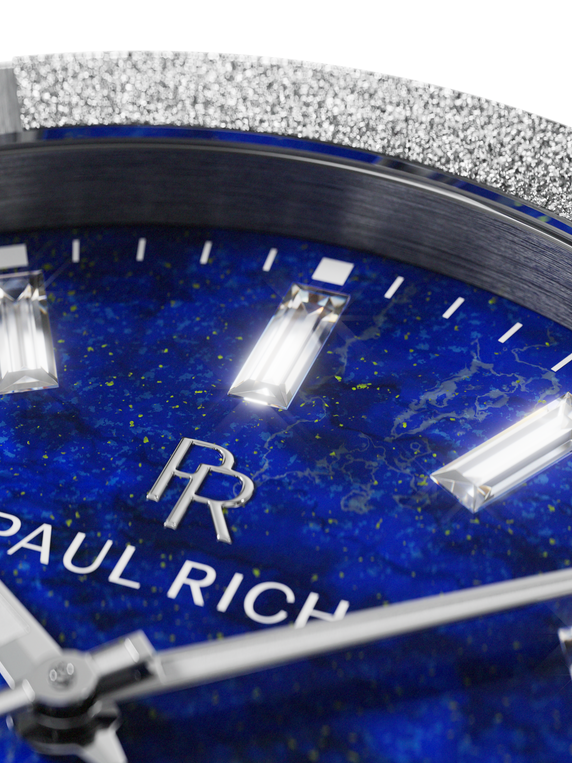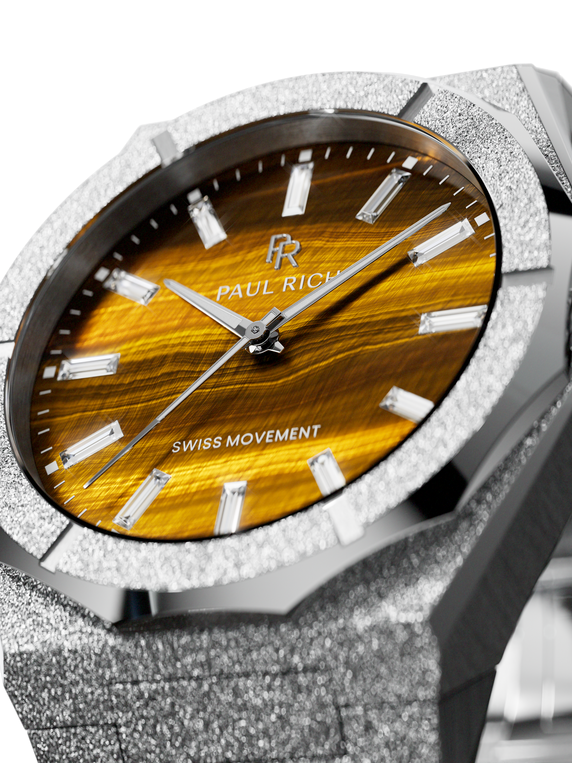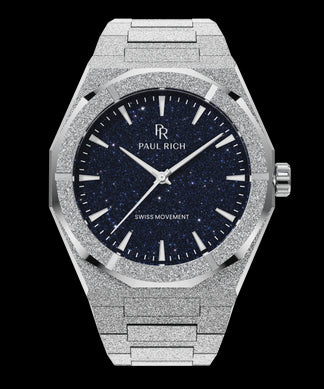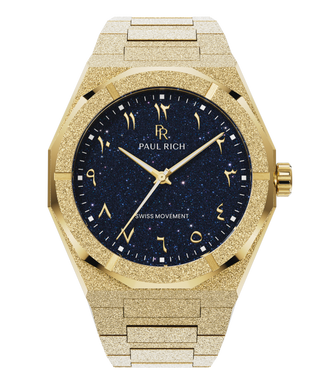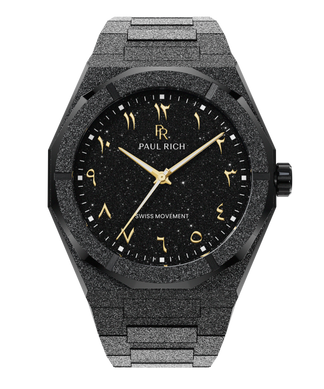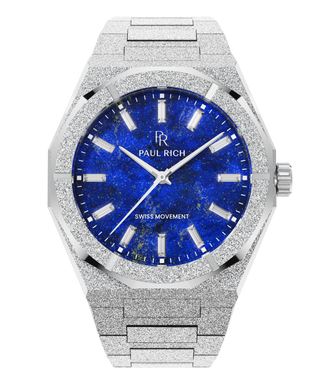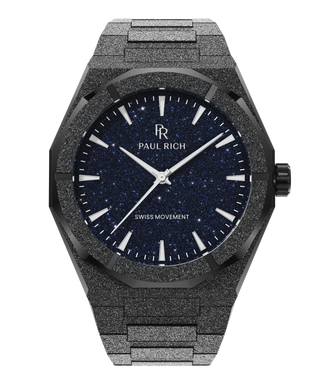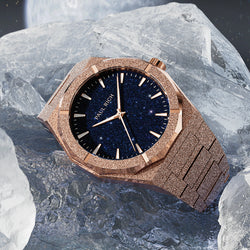

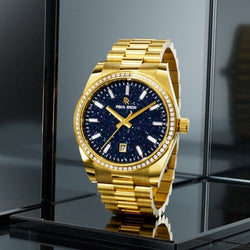

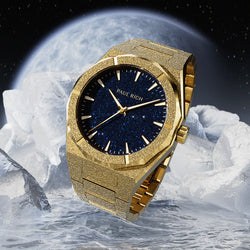
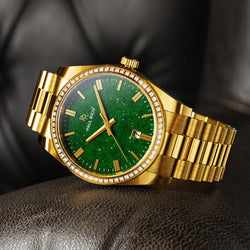
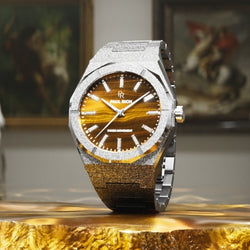
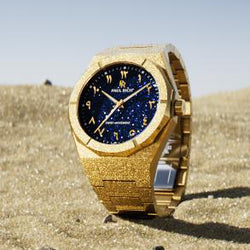
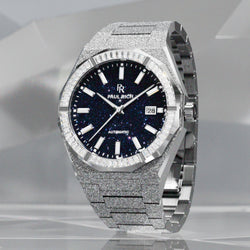
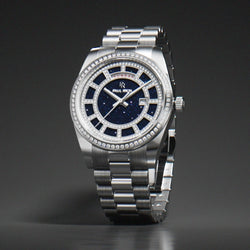
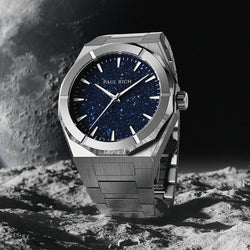
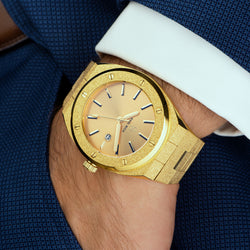
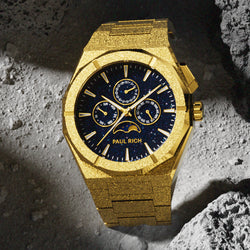
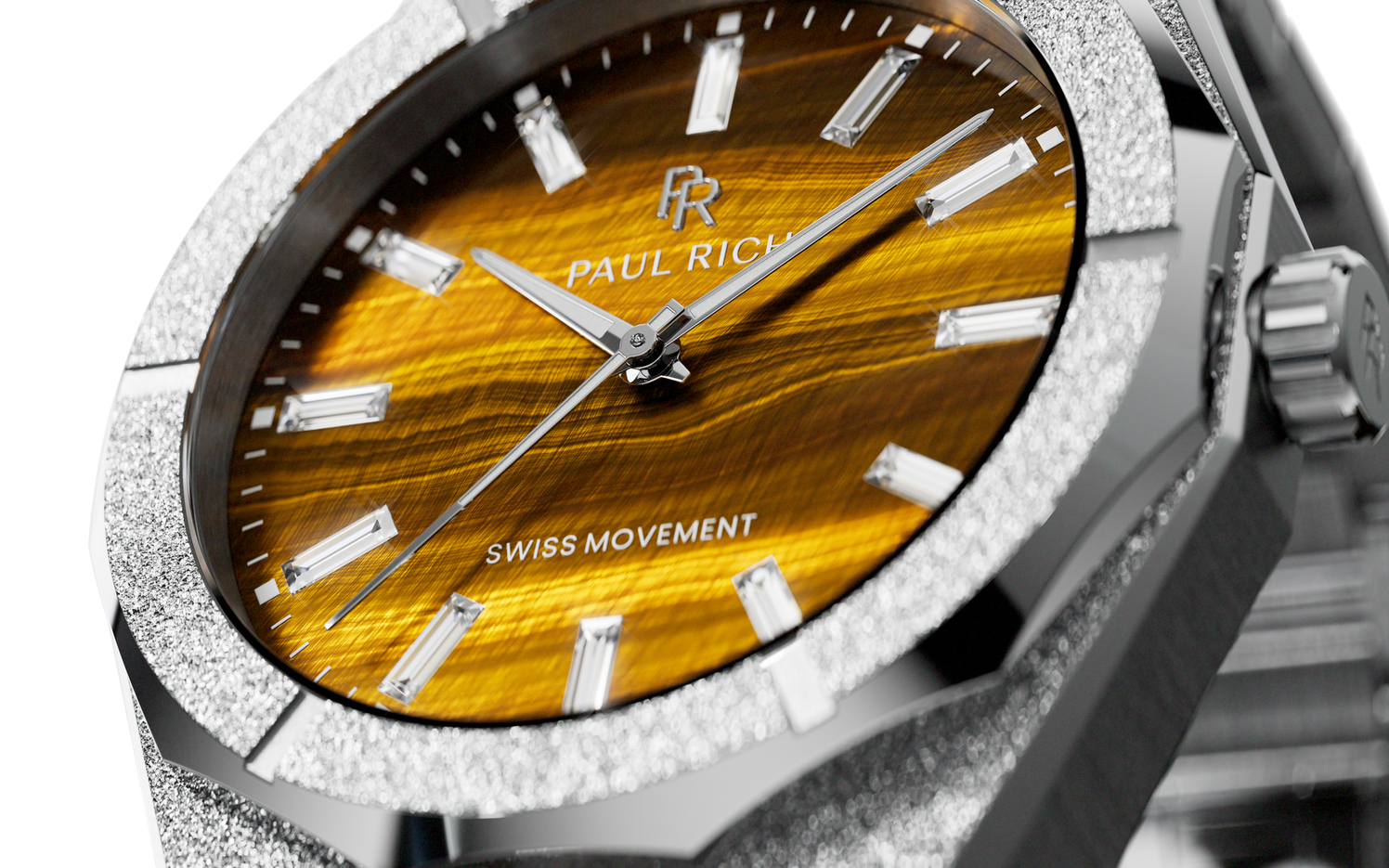
Turn a Tiger Flare under a lamp and a band of gold light runs straight across the face. Move your wrist and the band moves with you. That band is the stone itself, doing what tiger's eye has done since long before anyone could explain it. Here is the explanation.

What tiger's eye actually is
Tiger's eye is quartz. Same mineral family as the clear rock crystal in a jeweler's window, same hardness, around 7 on the Mohs scale. What sets it apart is what runs through it: millions of parallel mineral fibres, all lined up in one direction like the grain in a piece of wood.
Those fibres started out as crocidolite, a fibrous blue mineral that grows in seams through banded ironstone. The quartz came later. Over a very long stretch of time, silica-rich fluid worked through the crocidolite and quartz took the place of the fibres while holding their shape and their alignment. Geologists call that a pseudomorph, one mineral keeping the exact form of another. The iron left behind in the fibres oxidised, and that is where the honey and amber colour comes from. Where the iron never oxidised, the stone stays blue and carries a different name, hawk's eye.
That is the classic account, and it has held up for over a century. There is an honest footnote to it. Some researchers argue the quartz and the fibres grew alongside each other in a long sequence of tiny cracks rather than one replacing the other. The argument is about the order of events. Nobody disputes the fibres, and the fibres are the whole reason the stone glows.
Chatoyancy: the band of light
The effect has a name. Chatoyancy, from the French for cat's eye, because it does what a cat's pupil does in headlights.
The mechanism is simple once you see it. Light entering the stone strikes those parallel fibres and reflects off them. Because the fibres all run the same way, the reflection does not scatter in every direction. It folds into a single bright band, and that band sits at right angles to the fibres. Tilt the stone and the band slides across the surface. It is the same physics that gives silk its sheen and a satin ribbon its stripe of highlight, running here through solid quartz instead of thread.
This is also why no photograph settles the matter. A still image freezes the band in one position. The stone only makes sense in motion.
Why every dial is different
Every Tiger Flare dial is cut from a different piece of stone.
That reads like a marketing line until you look at how the stone forms. Crocidolite seams fold and buckle as the ironstone around them shifts, so fibre direction changes across a single block. Iron oxidises unevenly. Cut two dials from the same slab and you get different banding, different seam placement, a different width to the band of light.
The honey and amber colour stays consistent from watch to watch, because that is the stone's chemistry. The pattern does not, because that is the stone's history. Yours came out of one specific piece of rock, and nothing else carries the same map.

How a stone gets cut for a dial
Orientation is everything, and it is the part most people never hear about.
Chatoyancy only appears if the fibres run parallel to the polished surface. Cut across the grain and the effect disappears. The cutter has to read fibre direction in the raw block before the saw touches it, and reading it wrong costs the whole piece.
Traditional jewelry cuts tiger's eye en cabochon, a domed shape that squeezes the band into one tight, sharp line across the top. A watch dial cannot be domed. It has to be a flat slice, thin enough to sit under the hands and inside the case, thick enough to survive cutting and polishing at all. Going flat changes the character of the effect. Instead of a narrow line, the band opens out into a broad sweep that travels across the whole face as the angle shifts.
Then the slice is drilled for the hands, finished, and set. Stone that cracks anywhere in that sequence is gone.
Living with a stone dial
Tiger's eye sits around 7 on the Mohs scale, harder than window glass and softer than steel. In the Tiger Flare it sits under sapphire crystal, which takes the contact so the stone never has to. Normal wear asks nothing special of it.
The rest is the advice any watch deserves. Avoid hard knocks, and store it away from harder jewelry that could mark the case. On the dial itself there is nothing to maintain. It is rock.
The stone on the wrist
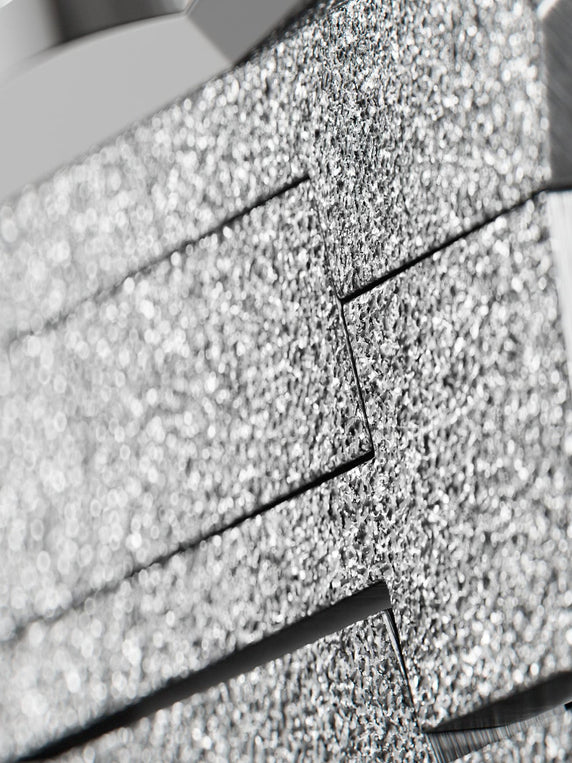
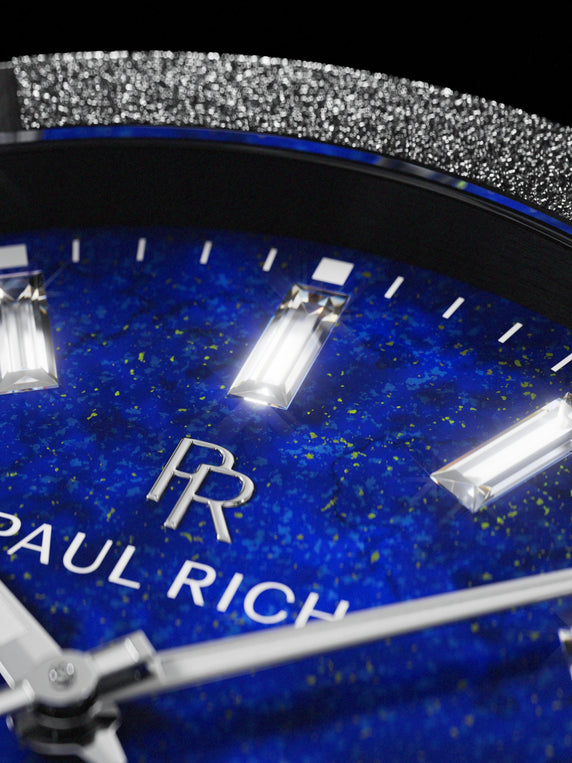
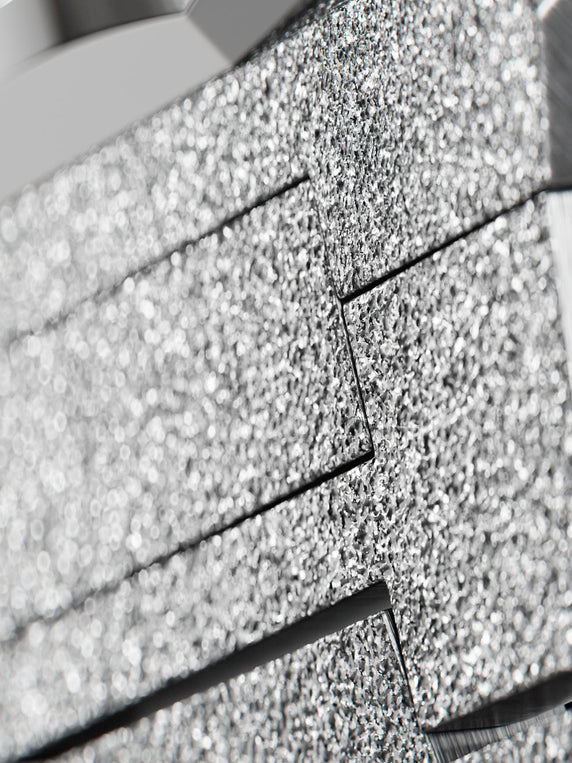
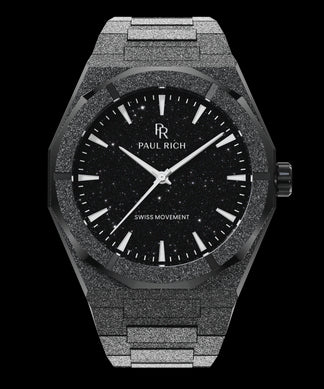
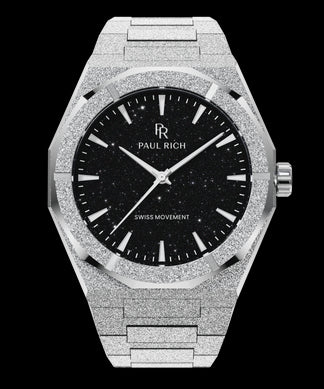
We set tiger's eye into the Frosted Star Dust II case in silver, gold, rose gold and black, with baguette-cut crystal markers laid across the face to throw light back the other way. The frosted steel works in every direction at once. The dial works in one line, and only when you move.
That contrast is the reason we built it.