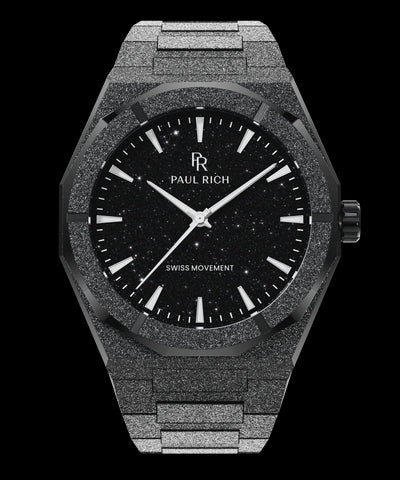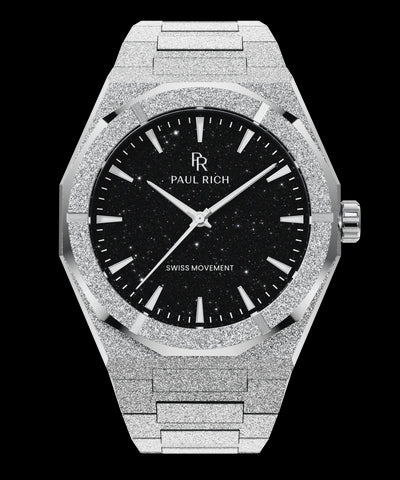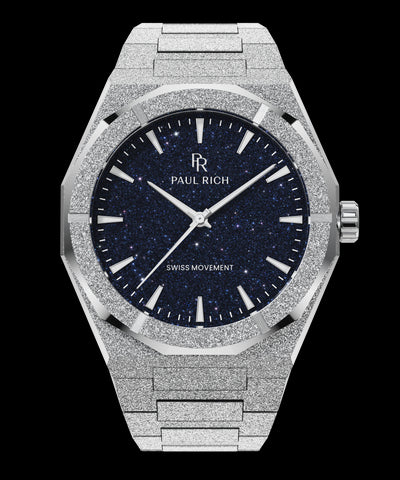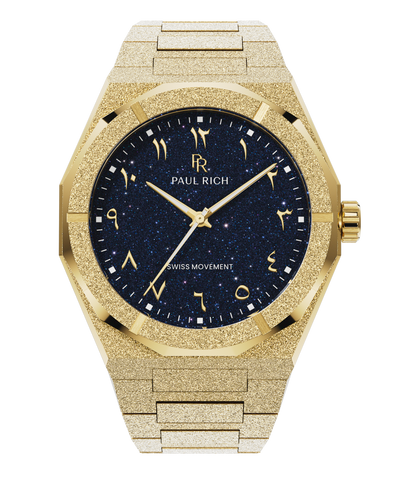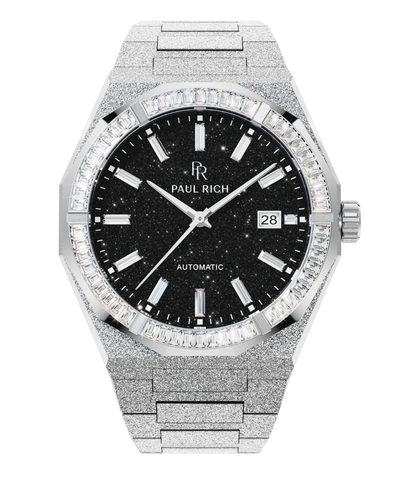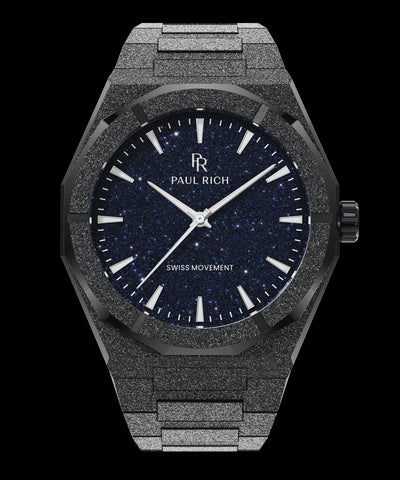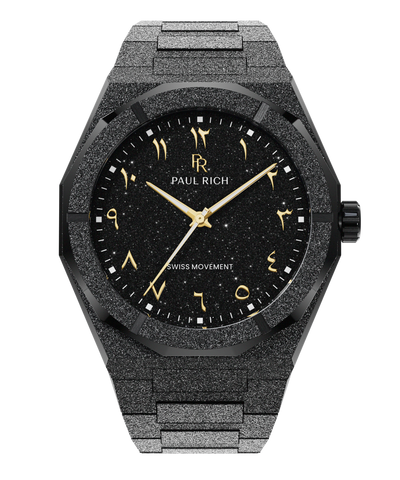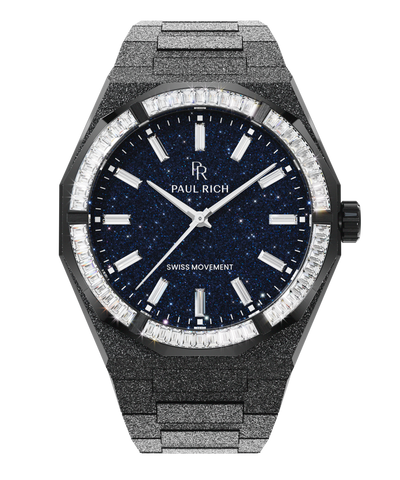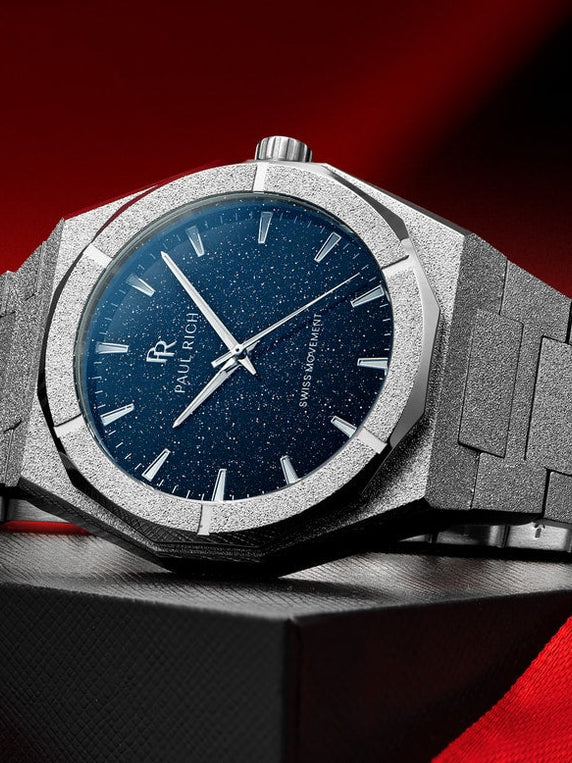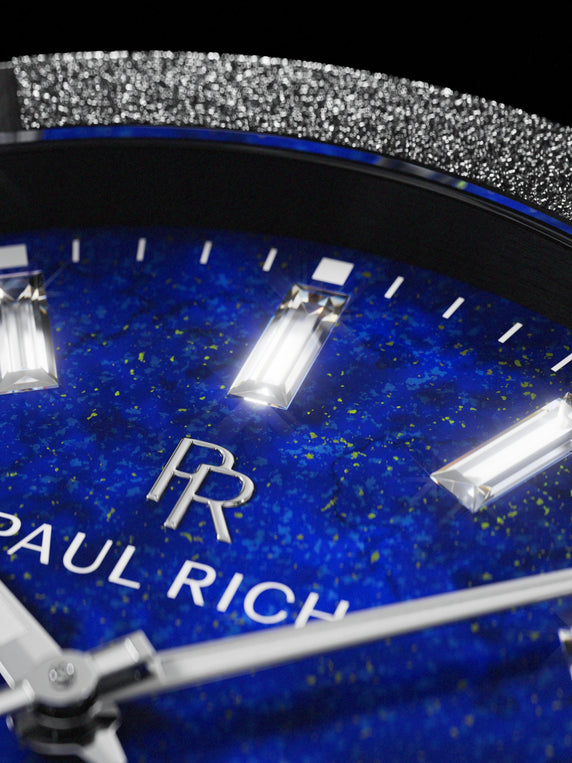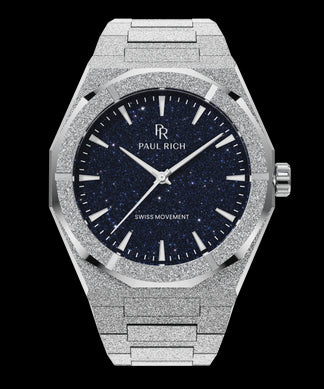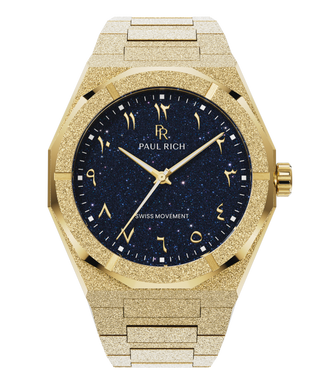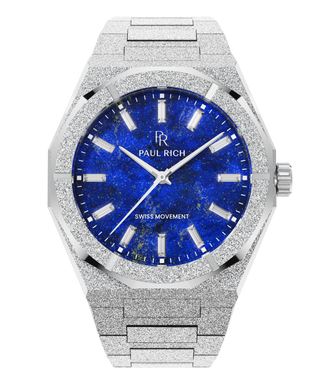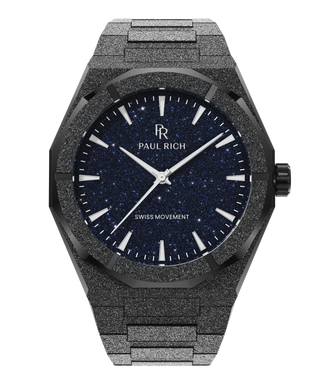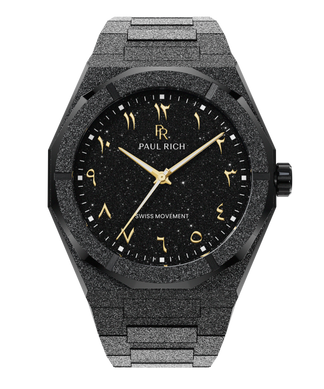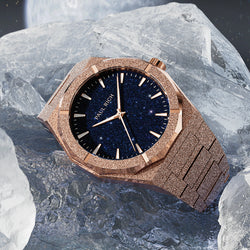
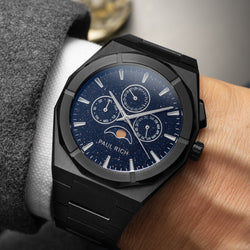
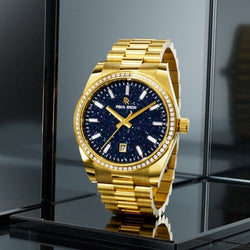

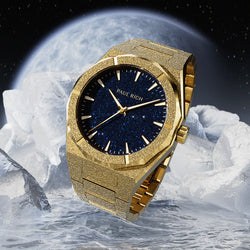
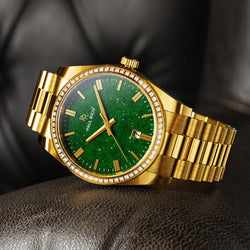
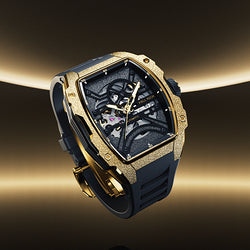
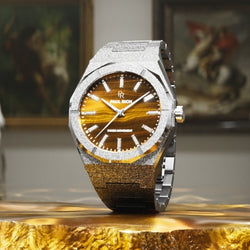
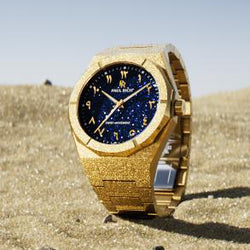
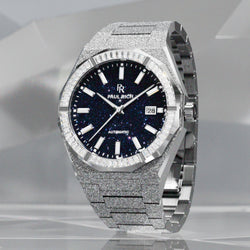
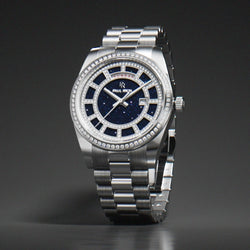
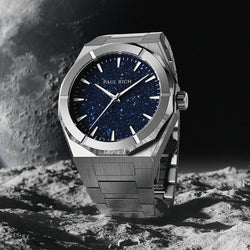
Worn by pharaohs. Used in Renaissance paint. Set into the regalia of kings. For 6,000 years, lapis lazuli was one of the most valuable materials on earth — at times more valuable than gold by weight. The Lapis Nebula is the first Paul Rich watch with a dial cut from real lapis lazuli. Here's what makes the stone worth that history.
What is lapis lazuli?
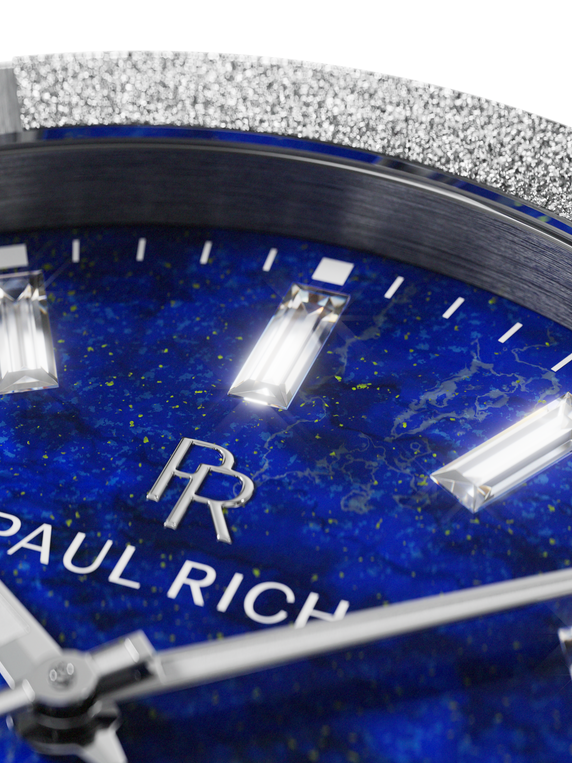
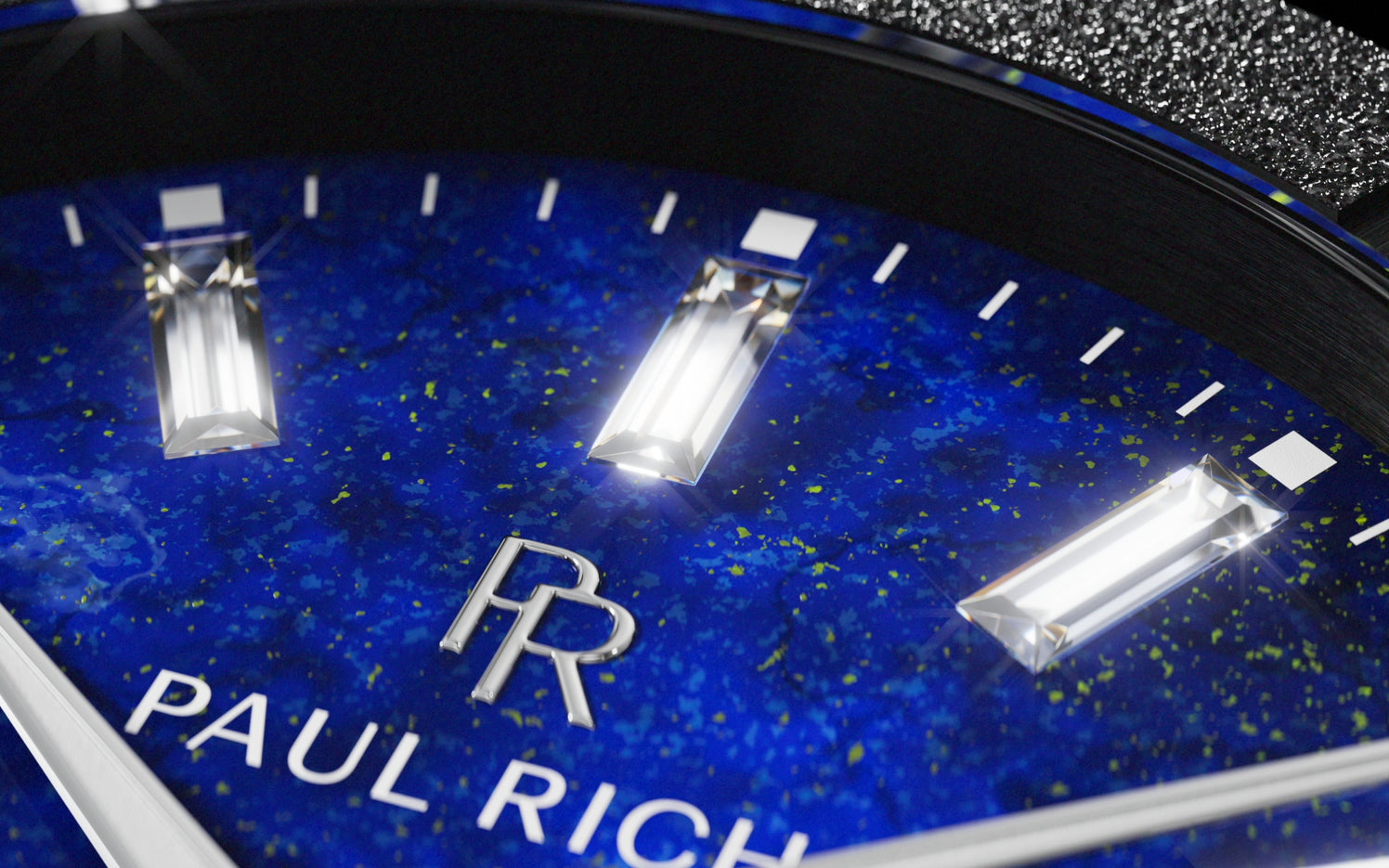
Lapis lazuli is a semi-precious stone made up of three minerals fused together: cobalt-blue lazurite, white calcite veining, and gold pyrite flecks. The proportions vary in every fragment, which is why no two stones are identical. The deep blue comes from sulfur trapped inside the lazurite crystal lattice — a chemistry that nature only produces in a handful of places on the planet.
The stone has been mined for over 6,000 years. Across that span, it's been carved into amulets, made into pigment, set into the jewelry of kings, and kept in royal treasuries.
The most valuable blue in history
Until the 19th century, there was no synthetic equivalent to the deep cobalt blue that lapis lazuli produces. Painters who wanted that exact shade had only one option: ultramarine, made from real lapis lazuli.
The pigment was so expensive that contracts between Renaissance patrons and painters would specify how much ultramarine the artist was permitted to use, and which figures in the painting would receive it. That's why, in old-master paintings, the most sacred subjects — saints, angels, the robes of royalty — are painted in this exact blue. The pigment cost more than the artist's labor.
Why it's hard to put in a watch
Most watch dials are stamped sheet metal, lacquered, and printed. They're flat, uniform, and reliable. Lapis lazuli is none of those things.
A real stone dial has to be cut, polished, and inlaid as a single solid piece. The fragment has to be thick enough to survive the cutting and thin enough to fit in the case. It has to have the right balance of cobalt, calcite, and pyrite — too much white veining and the watch loses the deep-blue read; too little, and the stone looks flat.
Every dial is judged by hand. Every dial comes from a different piece of stone. The scatter of gold pyrite across the deep blue is unique to each watch, and the look isn't reproducible. That's the point.
The Lapis Nebula
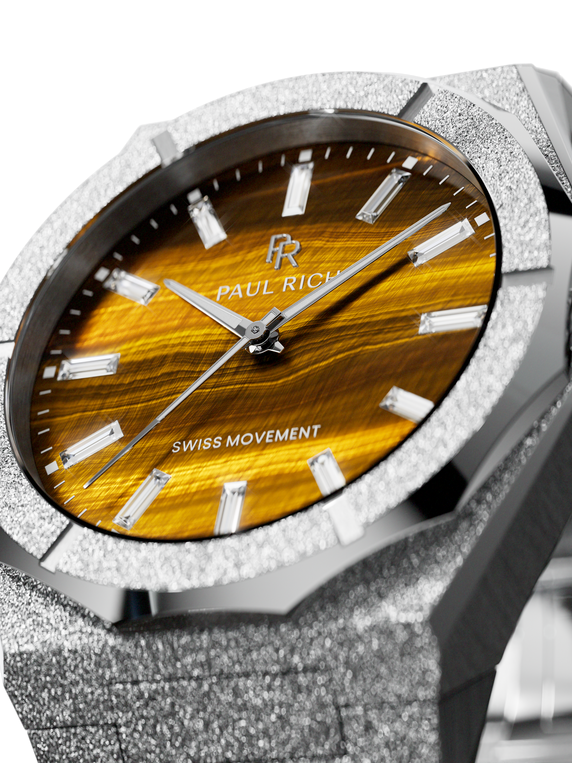
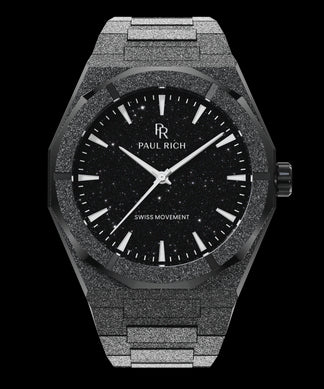
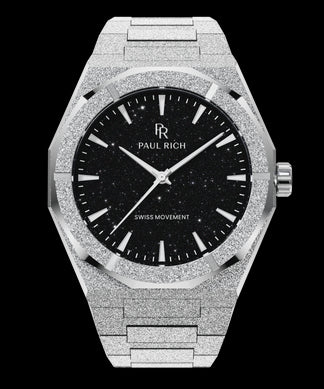
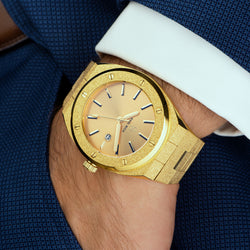
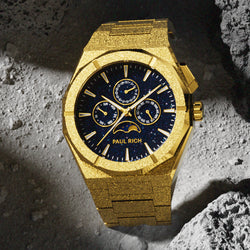
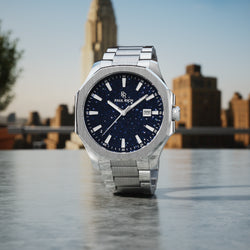
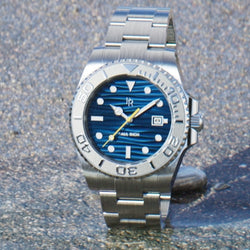
The Lapis Nebula is the first Paul Rich watch with a dial cut from real lapis lazuli. Each dial is a single piece of stone, set into the Frosted Star Dust II case in four finishes — Silver, Gold, Rose Gold, and Black.
Every dial is one of a kind.
How to wear it
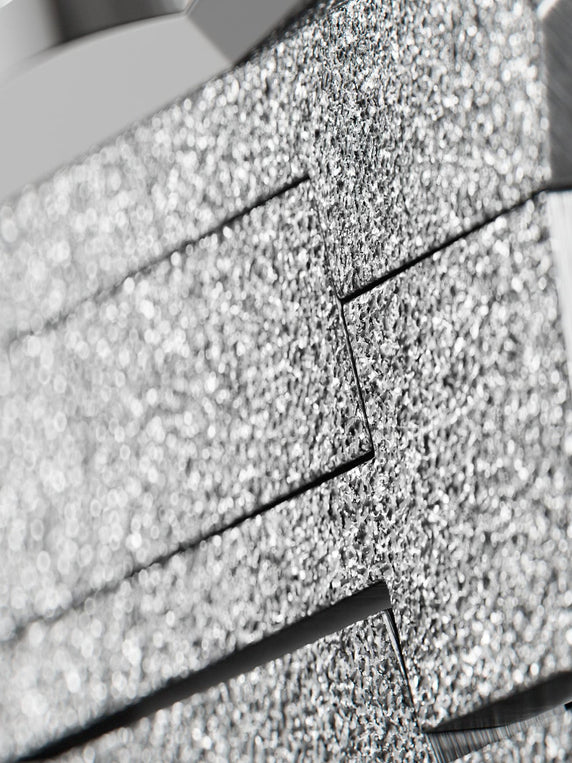
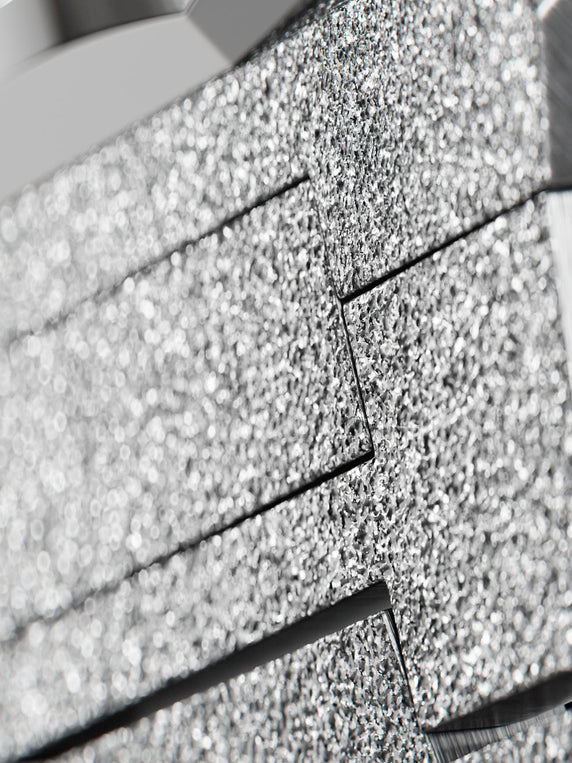
Lapis lazuli is harder than glass but softer than steel. It does what stone does — it survives. In the Lapis Nebula, the dial is sealed under sapphire crystal, the highest-grade glass used in watches today. The bracelet is the same frosted steel the rest of the Frosted Star Dust II collection is built around.
Wear it like any other watch. The stone won't crack from a desk knock or a cuff scrape. It's been around for 6,000 years for a reason.
Real stone, on a wrist, today
Real materials cost more, take longer, and look different from one watch to the next. That's the trade. The Lapis Nebula isn't trying to look identical — it's trying to look like real stone, on a wrist, today.