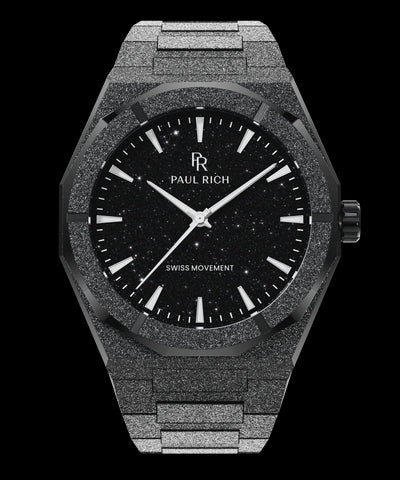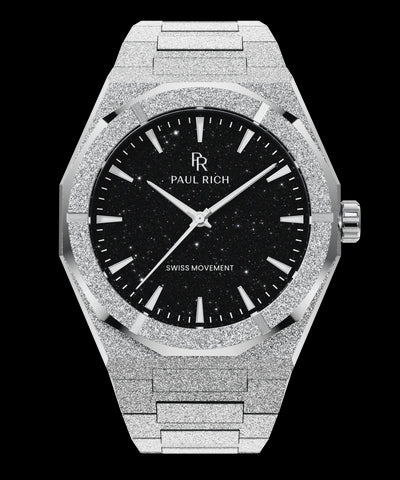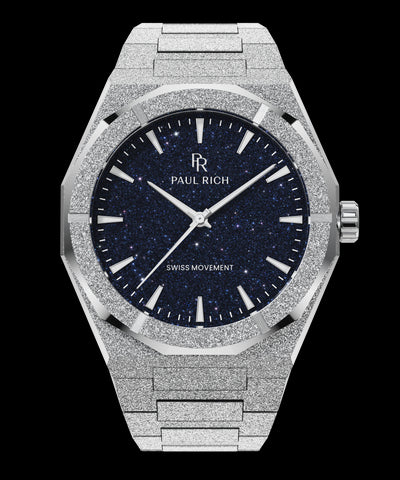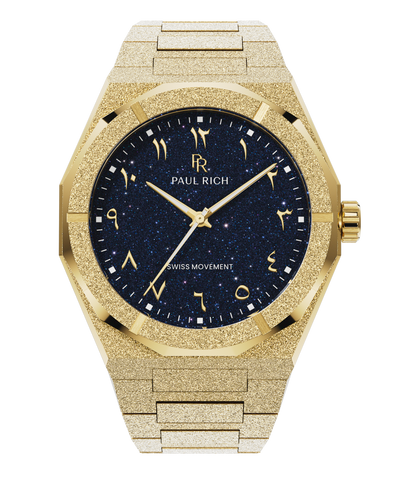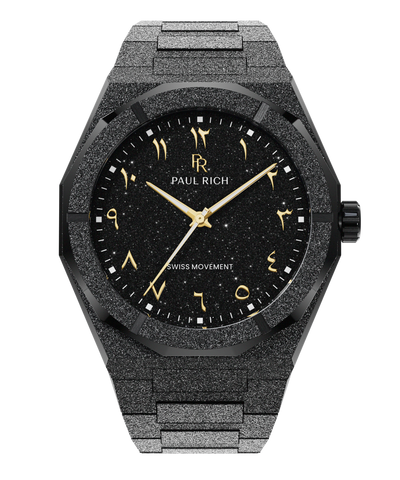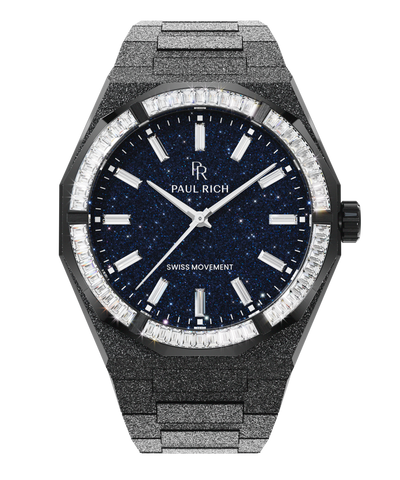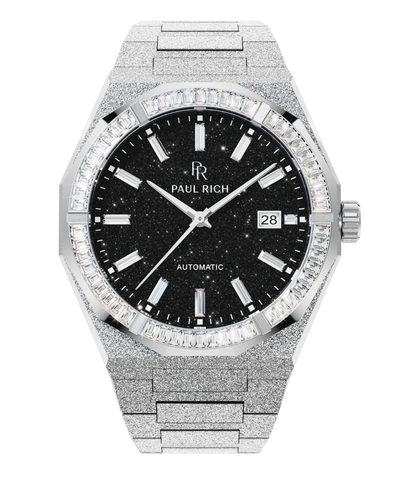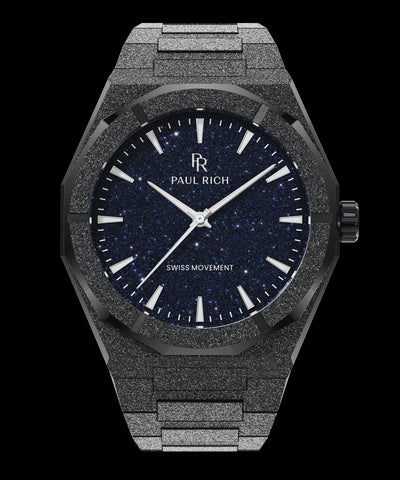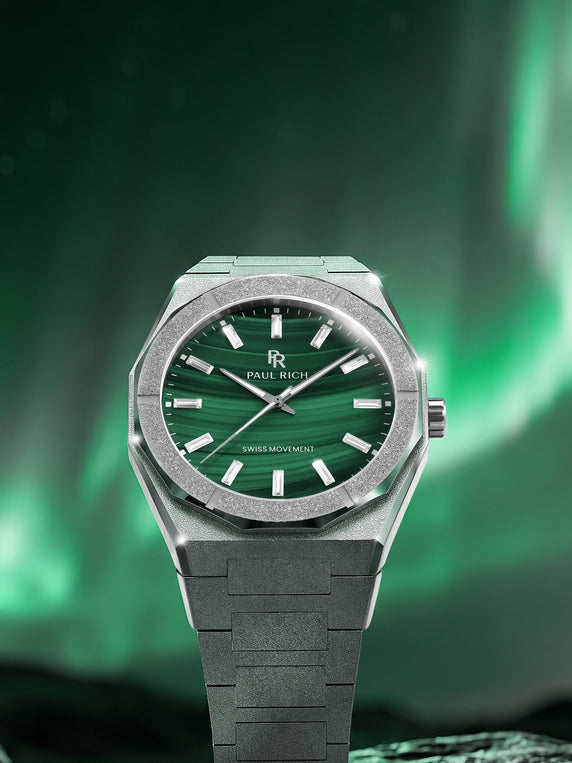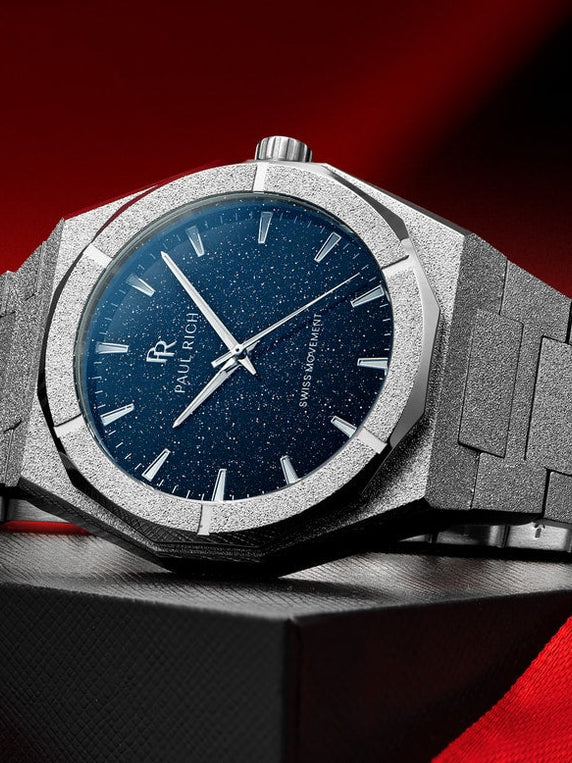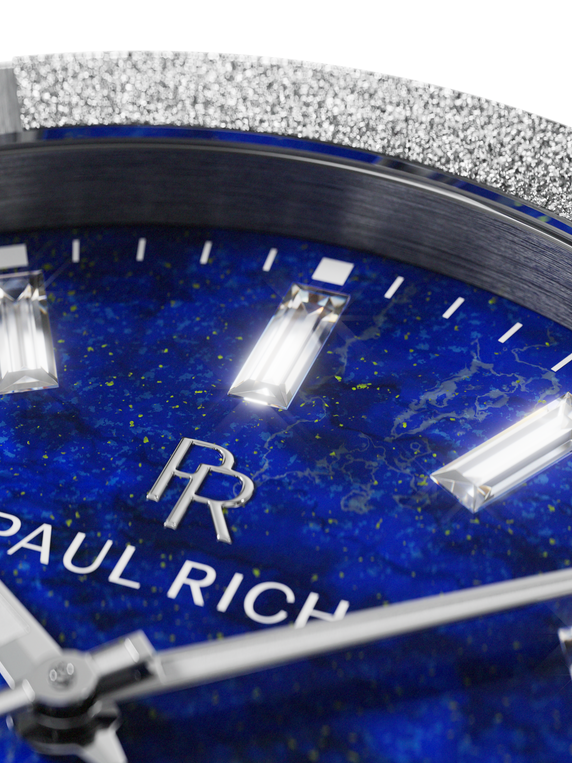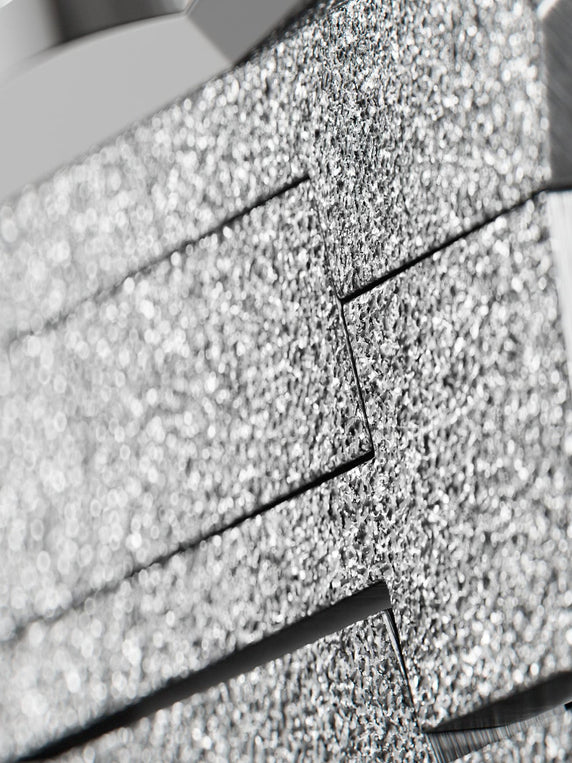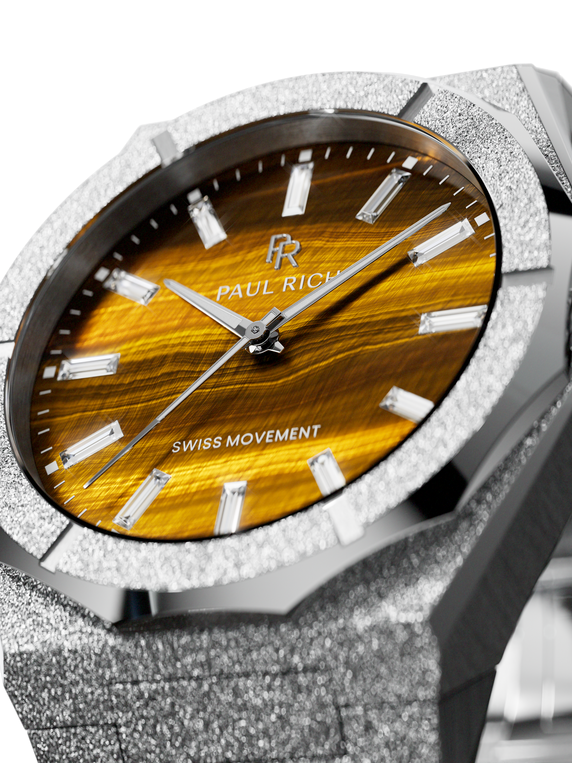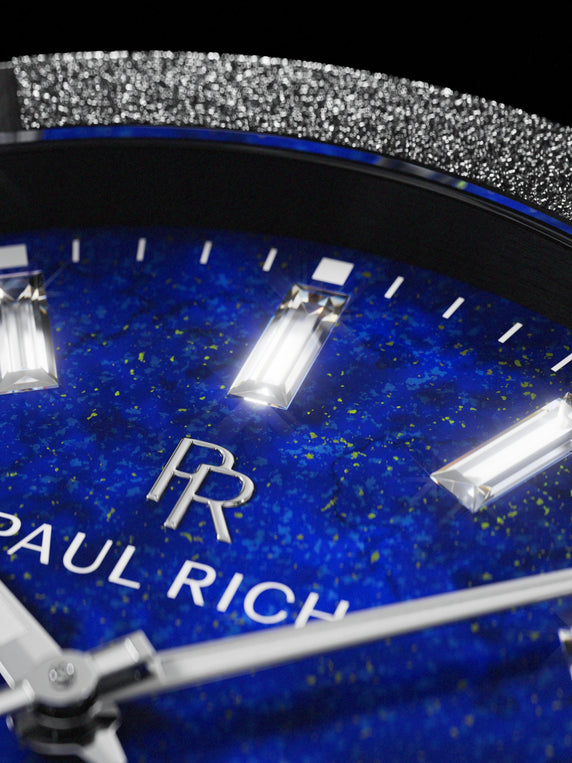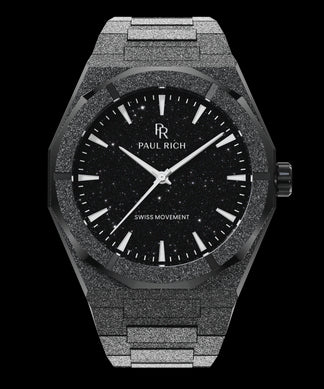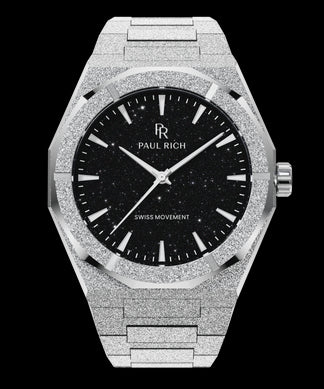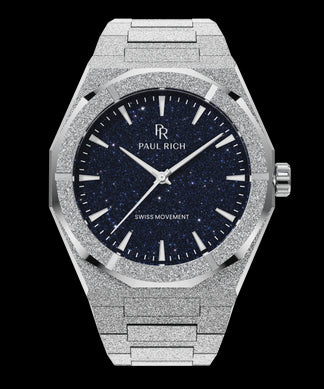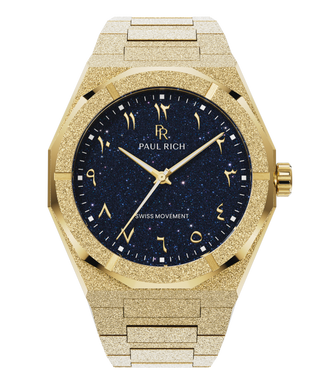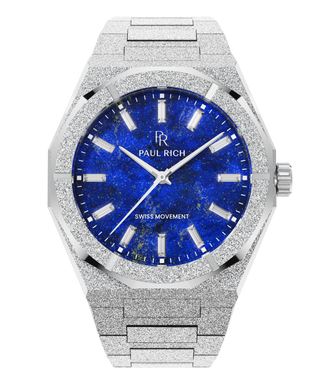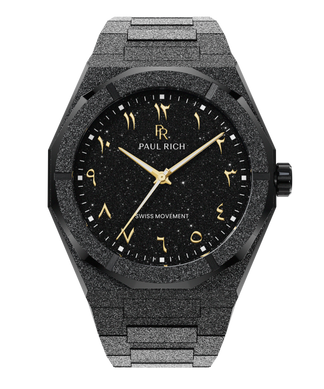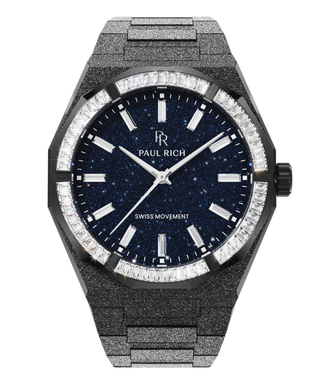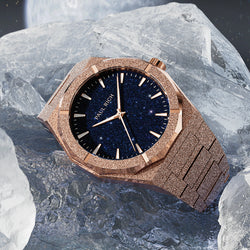
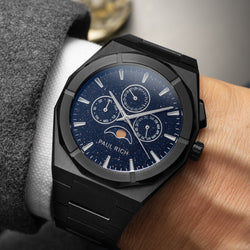
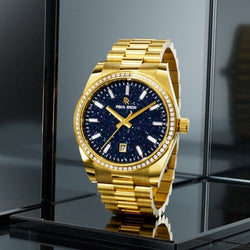


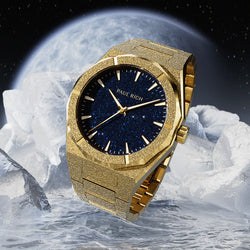
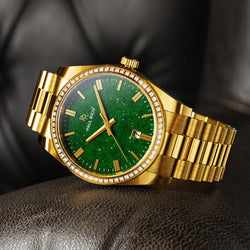
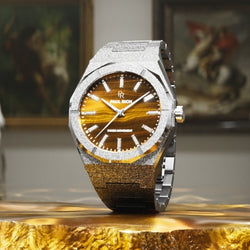
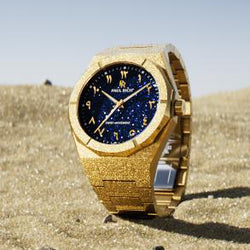
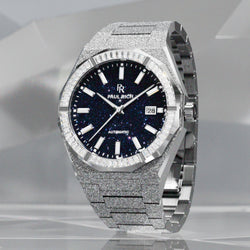
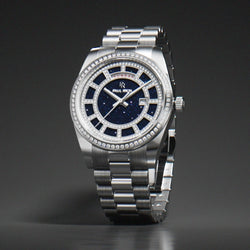
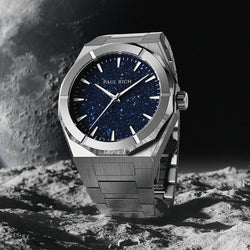
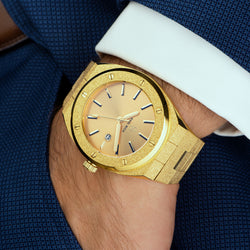
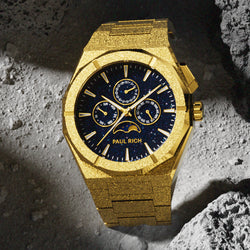
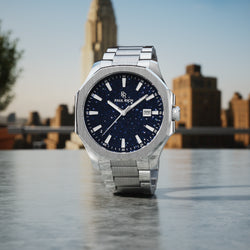
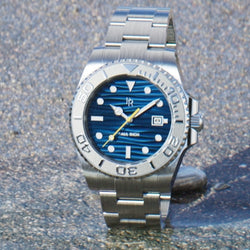
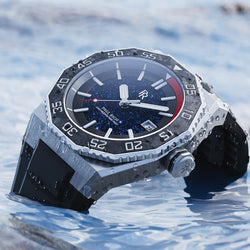
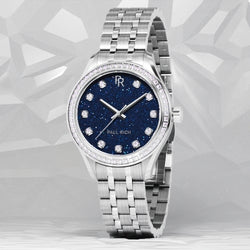
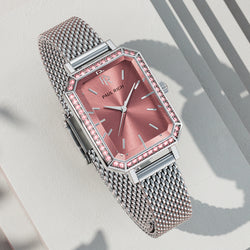
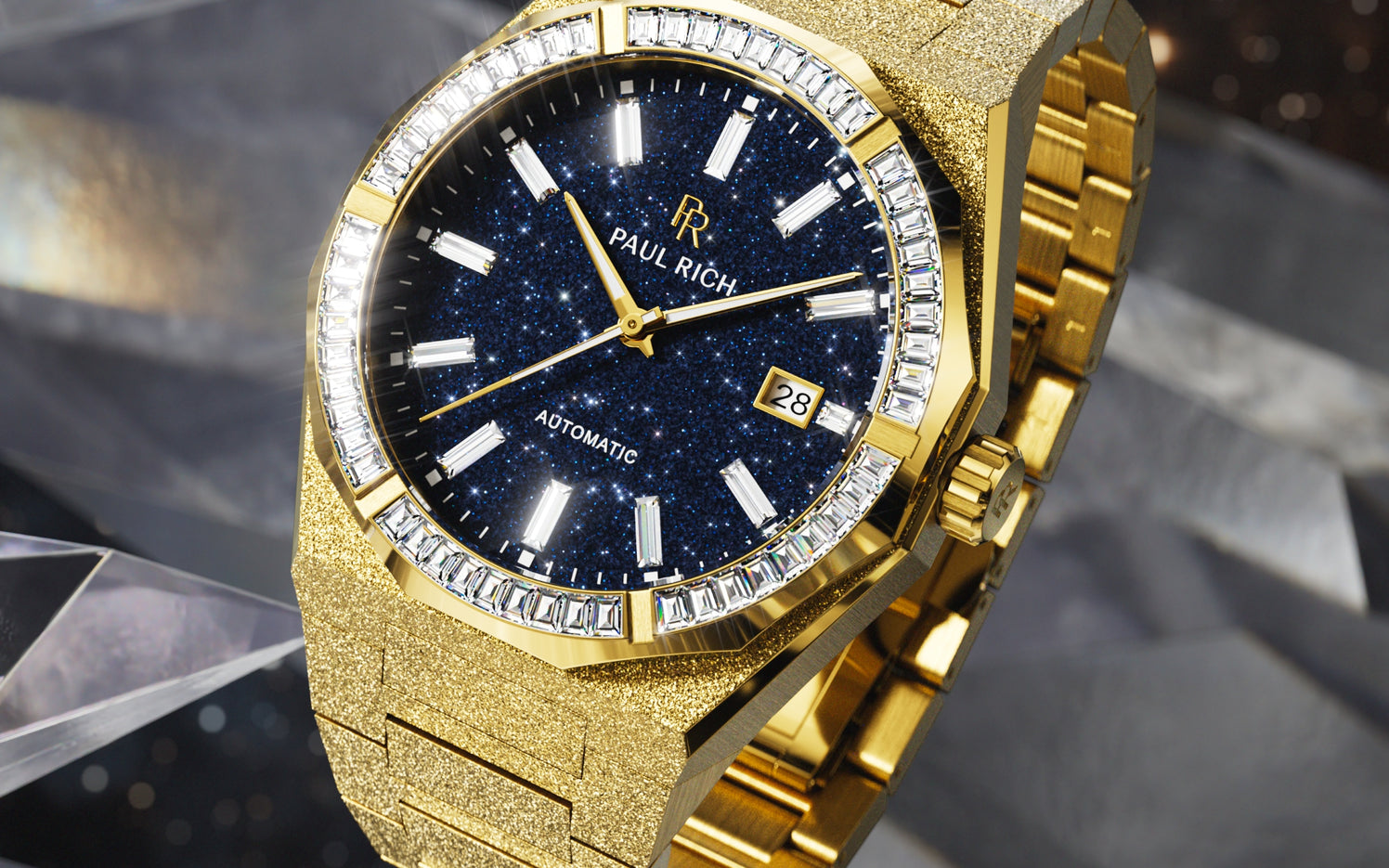
You've got 5.67 carats of hand-cut moissanite on your wrist. Every stone catches light differently — shifting, flashing, pulling attention from across a table. Now ask yourself: what's sitting between those stones and the outside world?
If the answer is mineral glass, you've got a problem. A key scratch, a doorframe bump, a dropped watch on tile — mineral crystal chips and cracks under impact that sapphire crystal shrugs off. When you're protecting stones that rival diamond in brilliance, the crystal covering them matters as much as the stones themselves.
What Sapphire Crystal Actually Is
Sapphire crystal glass is synthetic sapphire — aluminum oxide heated under extreme pressure until it forms a transparent material with a hardness of 9 on the Mohs scale. For context: diamond sits at 10. Stainless steel is around 5.5. Mineral glass lands at about 5–6.
In practical terms, only a diamond or another sapphire can scratch sapphire crystal. Keys, coins, concrete, sand, zippers — none of them leave a mark. The compressive strength is roughly 2,000 MPa, compared to 170 MPa for stainless steel. It doesn't just resist scratches — it resists impact.
This is the same material used in military optics, armored vehicle windows, and spacecraft sensor covers. It's not exotic in watchmaking — Rolex, Omega, and Breitling all use it. What's uncommon is finding it on a watch under $1,000.
Why Moissanite Watches Specifically Need It
A plain dial watch with a scratch on the glass is cosmetic damage. Annoying, but the watch still works and still looks presentable from a distance.
A moissanite-set watch with a scratched crystal is a different story. Every scratch sits directly over a field of stones designed to refract and scatter light. A single mark on the glass disrupts the light path across the entire dial and bezel. The stones are still perfect underneath, but you can't see them clearly through damaged glass. On a watch where the entire visual identity is light behavior on stone, crystal integrity isn't optional — it's the whole point.
That's why every Moissanite Frosted Star Dust II ships with full sapphire crystal glass — not sapphire-coated mineral, but actual sapphire crystal, both on the front dial and the case back. The front protects the 5.67 carats of moissanite across the bezel and dial. The case back (on automatic variants) lets you see the movement working through scratch-proof glass that stays clear for years.
Sapphire Crystal vs. Sapphire Coating
This is a distinction most brands don't talk about, and we think they should.
Sapphire coating applies a thin layer of sapphire to mineral crystal glass. It improves scratch resistance and reduces glare — both real benefits. But the base material is still mineral glass, which means the overall hardness and impact resistance don't match full sapphire. A sapphire-coated watch will not pass a diamond test on the crystal, because the glass underneath isn't sapphire. We use sapphire coating on several of our mid-range collections, and we state the limitation directly in the product description.
Full sapphire crystal is the entire piece of glass — solid synthetic sapphire, ground and polished to fit the case. Hardness of 9 across the whole surface, not just the top layer. This is what we put on the Moissanite Frosted Star Dust II, the Diamond Astro Skeleton, and the Aquacarbon Pro. These are our highest-value watches, and the crystal matches that standard.
The cost difference between coating and full sapphire is significant — it's one of the reasons a Moissanite FSDII costs $849 while a standard Frosted Star Dust II costs $389. You're paying for the stones, the certification, and the crystal that protects them.
How It Works on the Moissanite Frosted Star Dust II
The Moissanite FSDII has sapphire crystal on two surfaces:
Front crystal: Sits flat over the full pave field — 5.67 carats of hand-cut moissanite set across both bezel and dial in a continuous pattern. The sapphire is anti-reflective coated on the inner surface, which means more light passes through to the stones and less glare bounces back at your eyes. The result: the moissanite fire is sharper and more visible than it would be under standard glass.
Case back crystal (automatic variant): The automatic movement version exposes the rotor and gear train through a sapphire crystal case back. This isn't just for display — it's scratch-proof glass against your skin, belt buckles, desk edges, and everything else the back of a watch contacts daily.
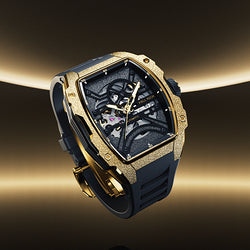
The same sapphire standard applies to the Diamond Astro Skeleton, where full sapphire sits over a skeleton dial surrounded by hand-set lab-grown VVS diamonds on the bezel. At $1,499, the Diamond Astro is our most premium piece, and every surface that shows stone or movement is covered by sapphire — front and back.
The Practical Difference
Wear a mineral crystal watch daily for two years and hold it under a light. You'll see a network of fine scratches — hairlines from sleeves, bags, desks, and door handles. None of them were dramatic when they happened. They accumulated invisibly.
Wear a sapphire crystal watch for the same two years under the same conditions. Hold it under the same light. The crystal looks the way it did when you opened the box. That's the difference 3.5 points on the Mohs scale makes over time.
On a moissanite watch, where clarity is the entire experience, that difference compounds. Year one, both crystals look identical. Year three, the sapphire watch still catches light the way it was designed to. The mineral glass watch doesn't.