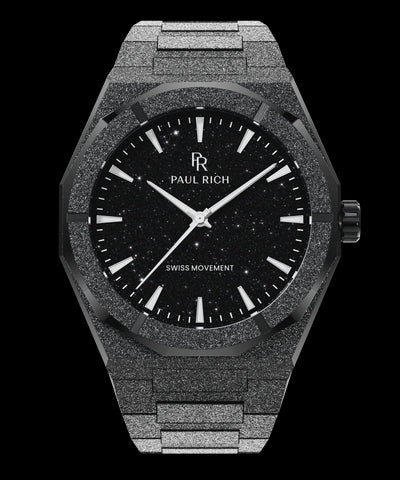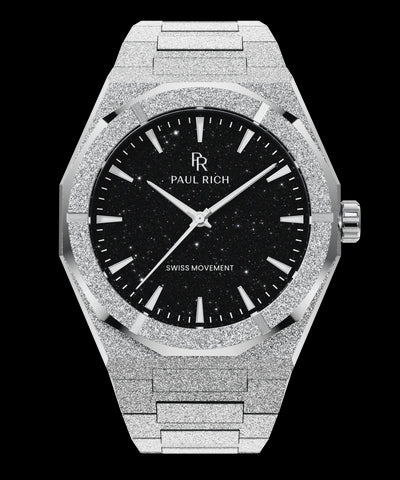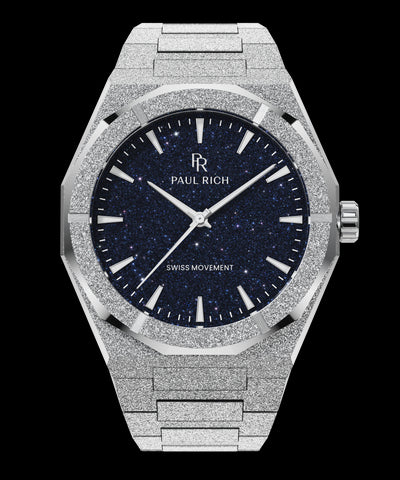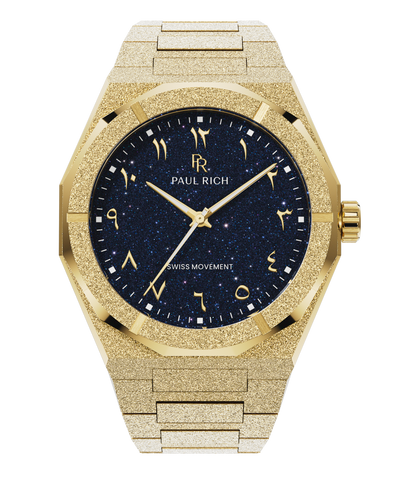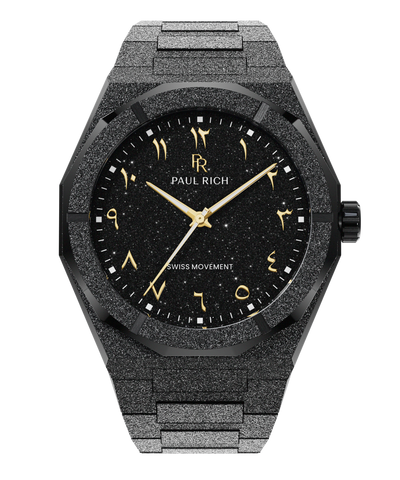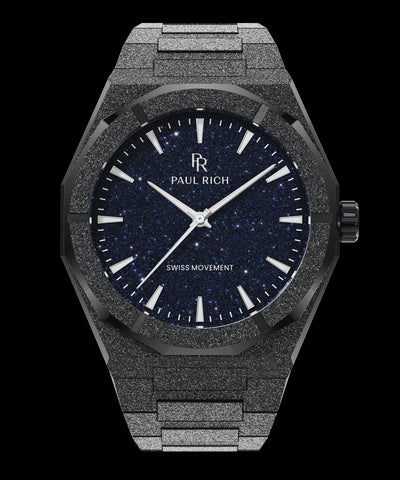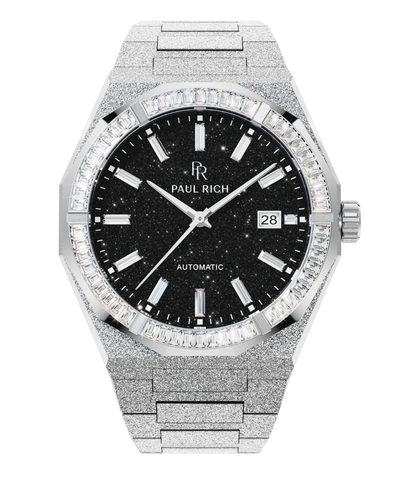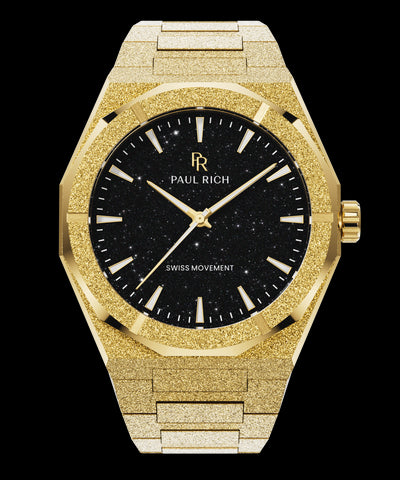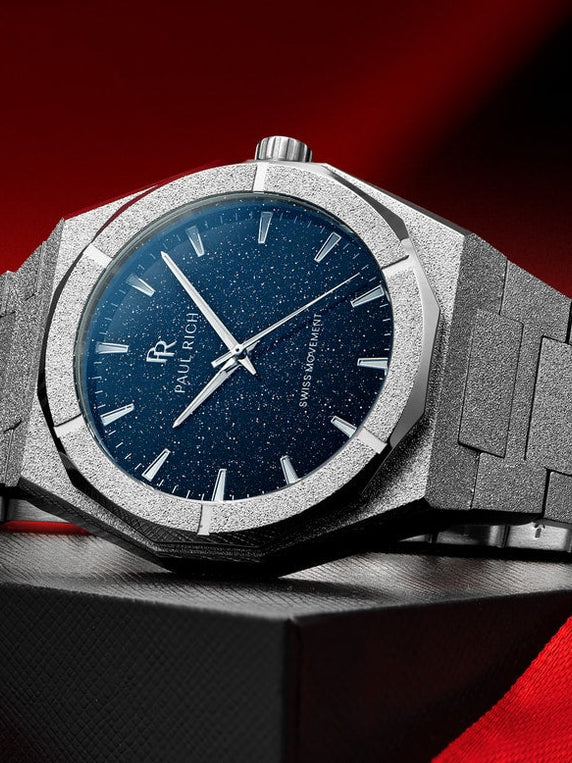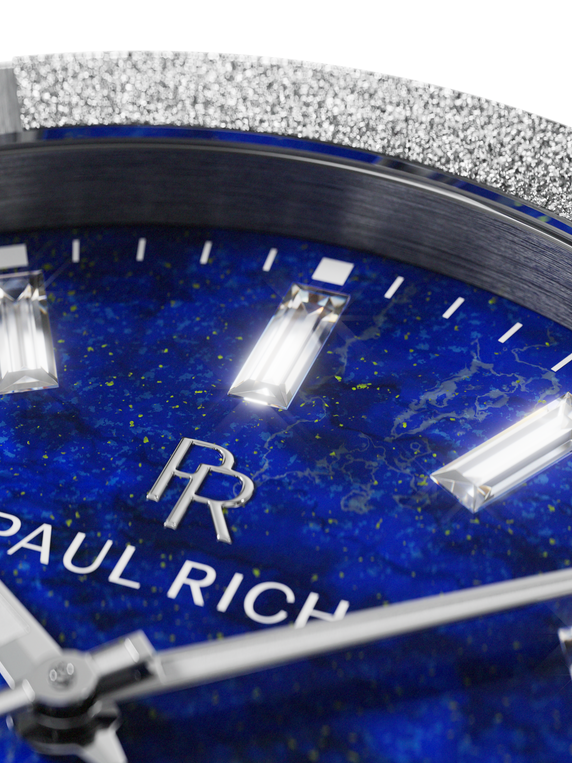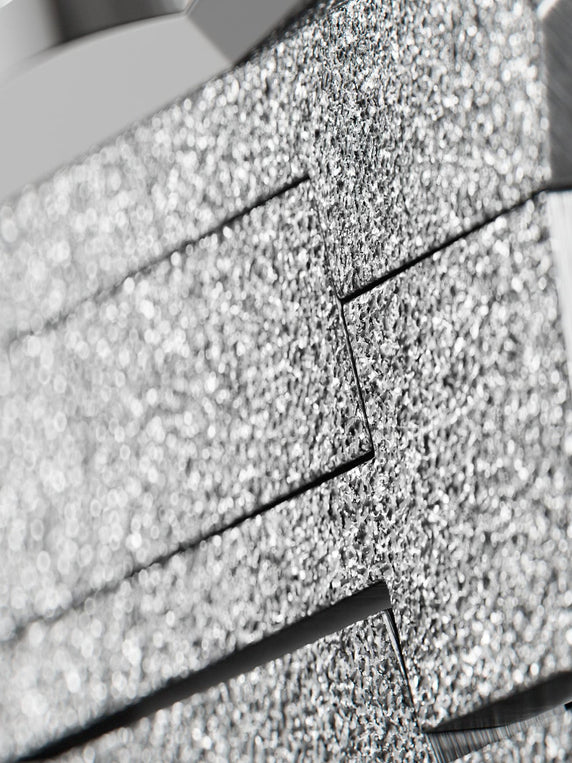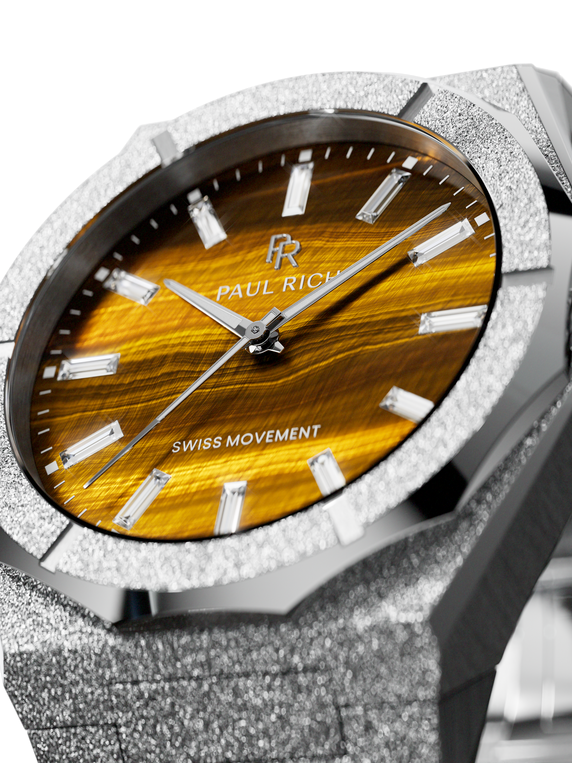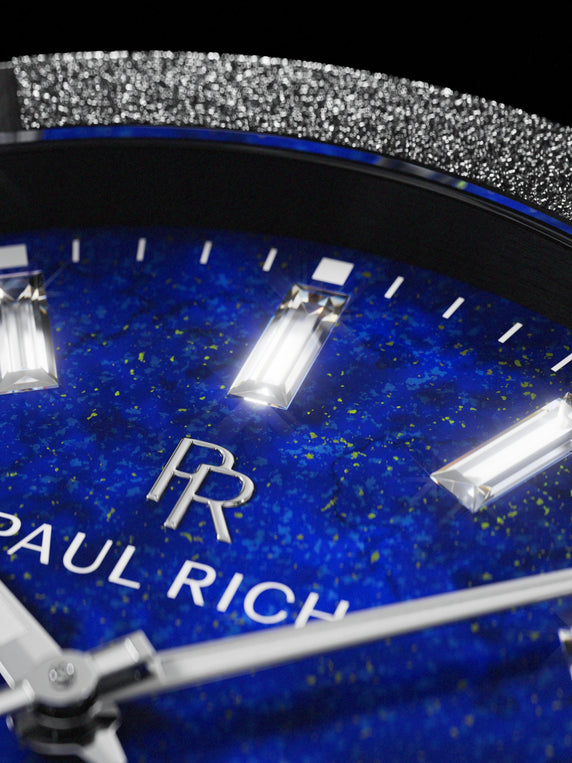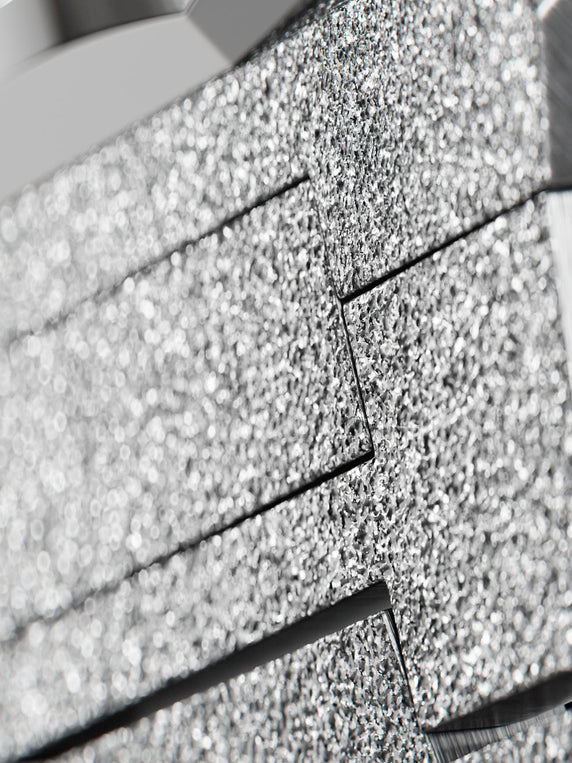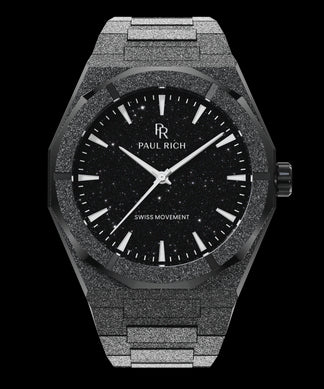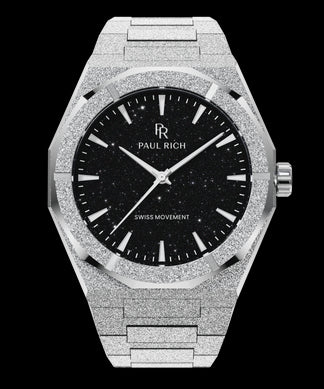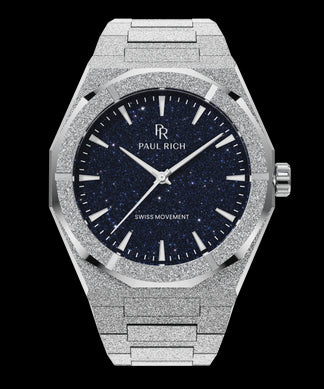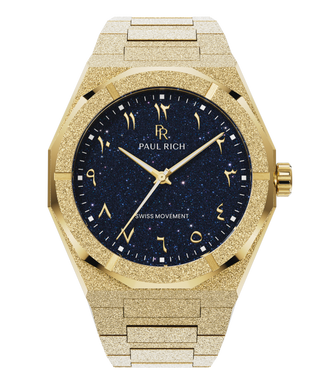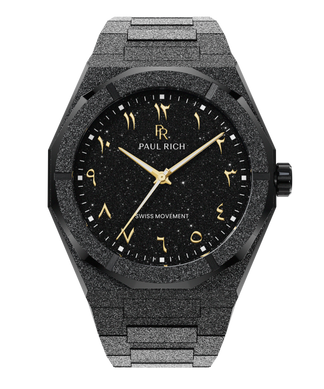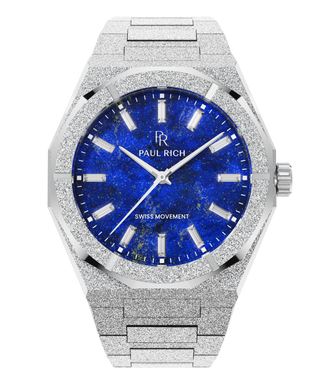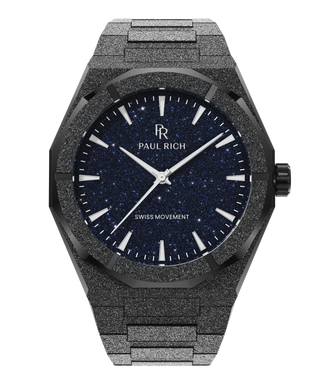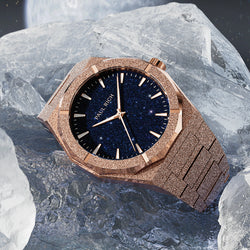
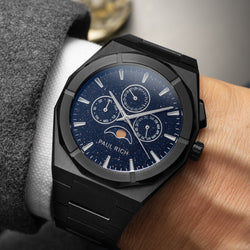
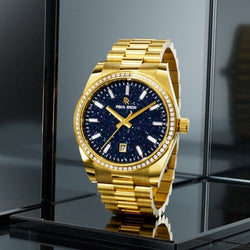

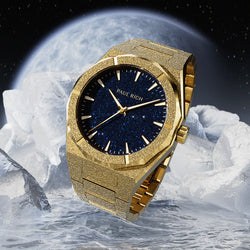
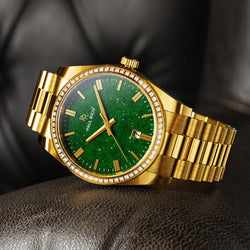
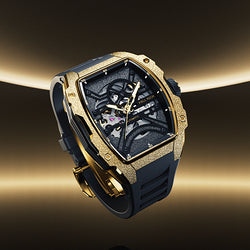
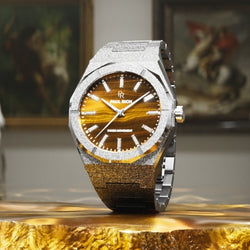
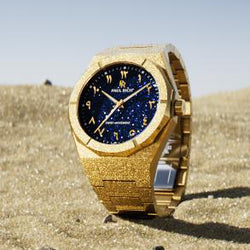
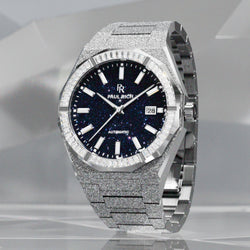
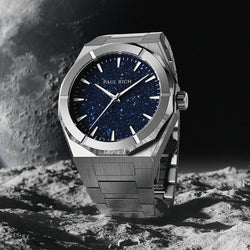
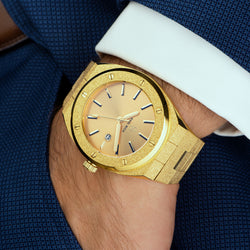
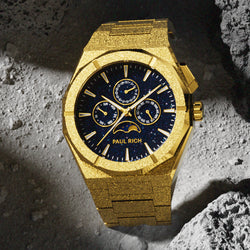
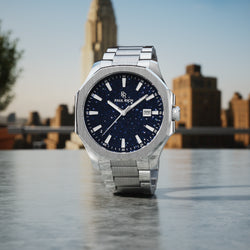
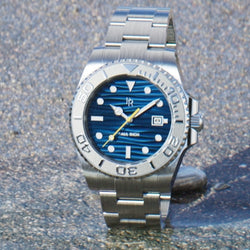
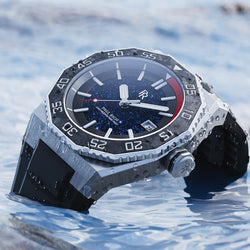
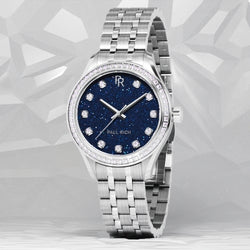
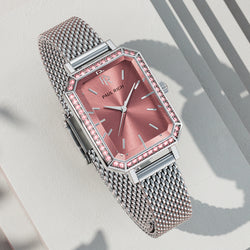
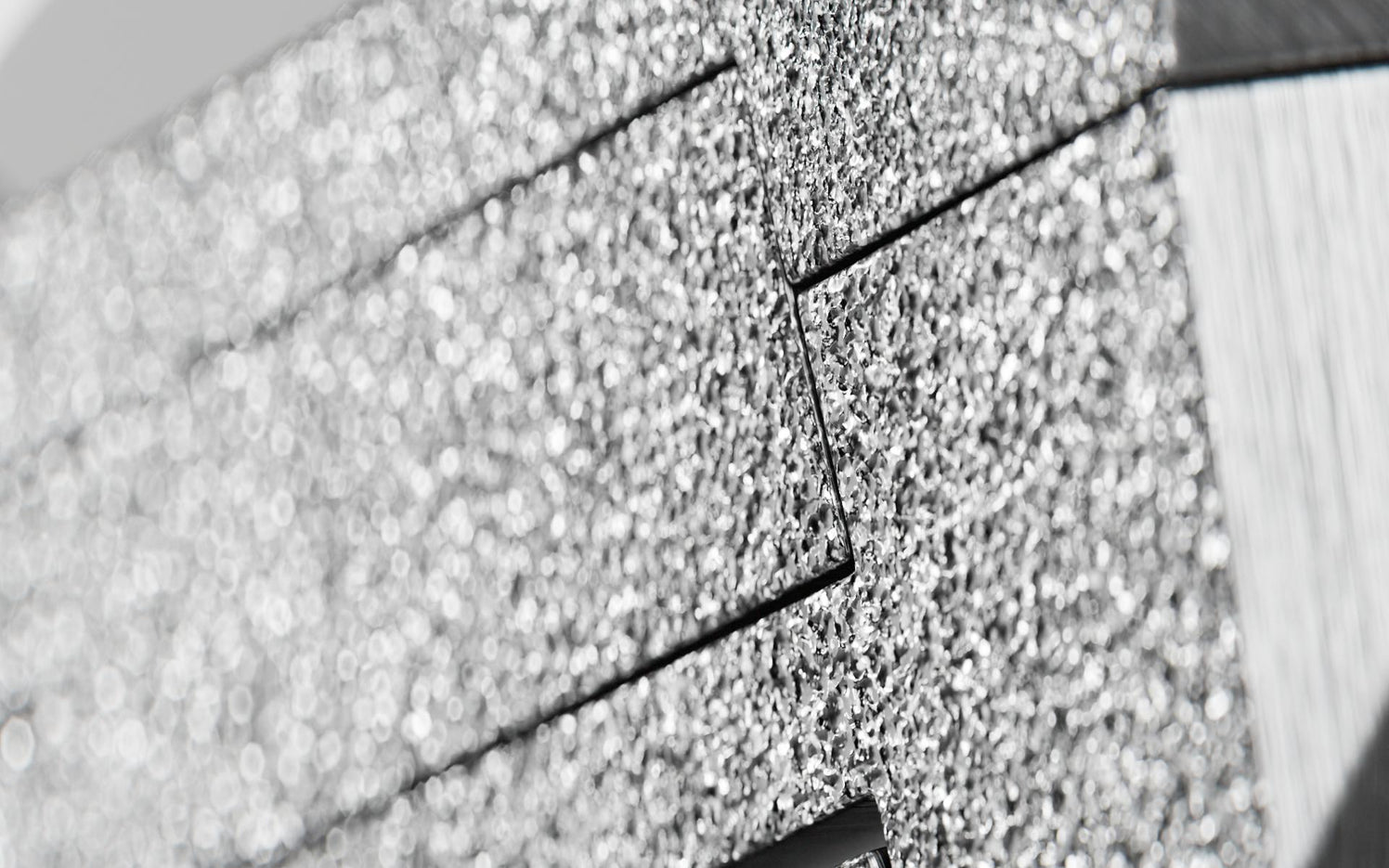
The frosted finish is our most recognizable surface. Thousands of diamond-cut facets pressed into stainless steel, each one catching light independently. Under direct sun, the case flashes white. Under warm indoor light, it glows. Tilt your wrist and the whole surface shifts.
That is not polish, and it is not brushing. It is a different technique entirely.

How It's Made
The process is a modern adaptation of the Florentine finish — a decorative method developed by Italian artisans centuries ago. The original technique involves cutting micro-incisions into a gold surface to create a sparkling, textured exterior. It is still used today on watches from houses like Audemars Piguet, where a single frosted case runs $30,000 or more.
We worked with our manufacturing partner over several months to develop the specific engraving tool and cutting parameters for 316L stainless steel. Micro-particles of industrial diamond dust cut thousands of precisely angled incisions into the case and bracelet. Each incision creates a facet. Each facet reflects light independently.
The diamond dust is bonded to the surface — not coated on top. This matters for durability. The texture does not wear off with daily use. It is part of the steel itself.

What You See
The effect changes depending on light and angle. Under direct sunlight, the facets scatter light in every direction — the case looks almost white, like frost on metal. Under warmer, indirect light, the texture becomes more subtle, with individual facets catching and releasing light as you move. At night, under city light or candlelight, the surface shifts between matte and bright in quick flashes.
We describe it as dust frozen mid-spark. That is the closest language to what the surface actually does.

Where It Appears
The frosted finish started with the original Frosted Star Dust — the collection that built the brand. Since then, we have expanded the technique across multiple families.
Frosted Star Dust II — 38 watches sharing the same 43mm frosted stainless steel case. Swiss Ronda 763 quartz movement. Genuine aventurine stone dials in blue, green, black, and red. Starting at $336.
Moonphase Frosted Star Dust II — The frosted case with a working moonphase complication at 6 o'clock. 43mm, 5 ATM water resistance.
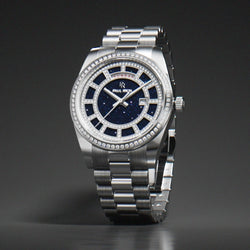
Moissanite Frosted Star Dust II — 5.67 carats of IGI-certified lab-grown moissanite hand-set across the bezel and dial, mounted on a frosted case. Sapphire-coated crystal. Starting at $849.
Frosted Arabic Edition — Arabic numeral indices on aventurine dials with the same frosted case and bracelet. 30 watches, starting at $389.

Why It Costs What It Does
The Florentine finish on a Royal Oak Frosted runs around $30,000. Our frosted cases start at $336. Same foundational technique — industrial diamond dust on metal — applied to 316L stainless steel instead of 18K gold. The material difference accounts for most of the price gap. We do not pretend it is the same watch. We do claim it is the same method, adapted for a different material at a different price point.
Care
The bonded diamond-dust texture holds up to daily wear, but it does accumulate skin oils and dust in the micro-facets over time. A soft brush with warm water and mild soap restores the full light-catching effect. Avoid abrasive cloths — they are unnecessary. The finish is tougher than it looks.
For the full care guide, see How to Care for Your Frosted Finish Watch.