

Short answer: over 200,000 people think so. But you probably want specifics, not a number. Here's what actually goes into a Paul Rich watch — material by material, component by component — so you can decide for yourself.
The Case: 316L Stainless Steel, Frosted or Brushed
Every Paul Rich watch starts with a 316L stainless steel case — the same surgical-grade alloy used in dive watches costing five times more. It's hypoallergenic, corrosion-resistant, and harder than titanium, meaning scratches are less visible and less frequent.
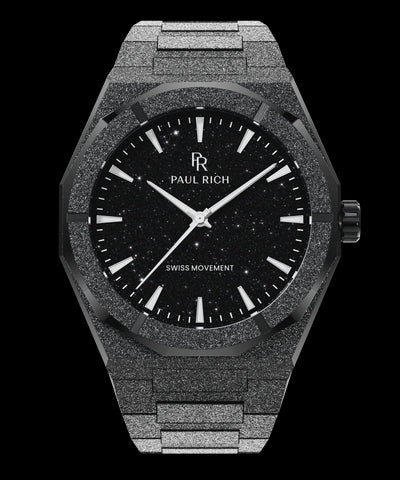
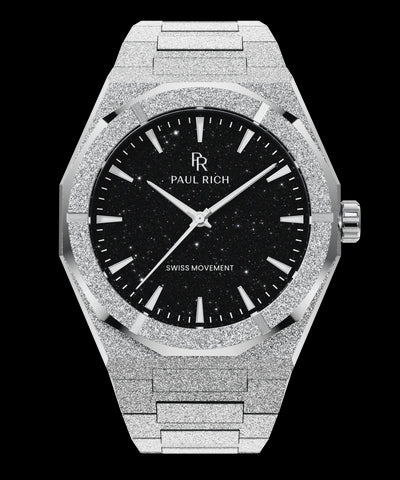
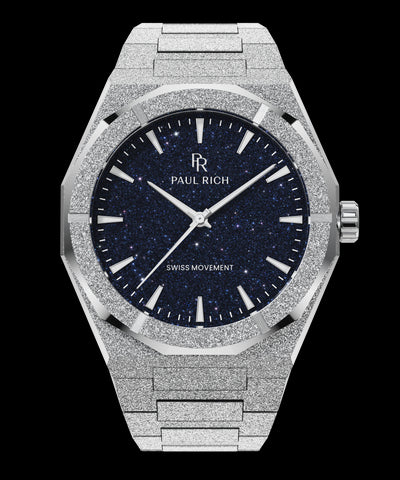
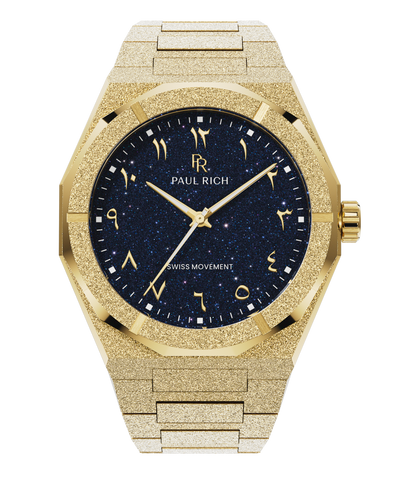
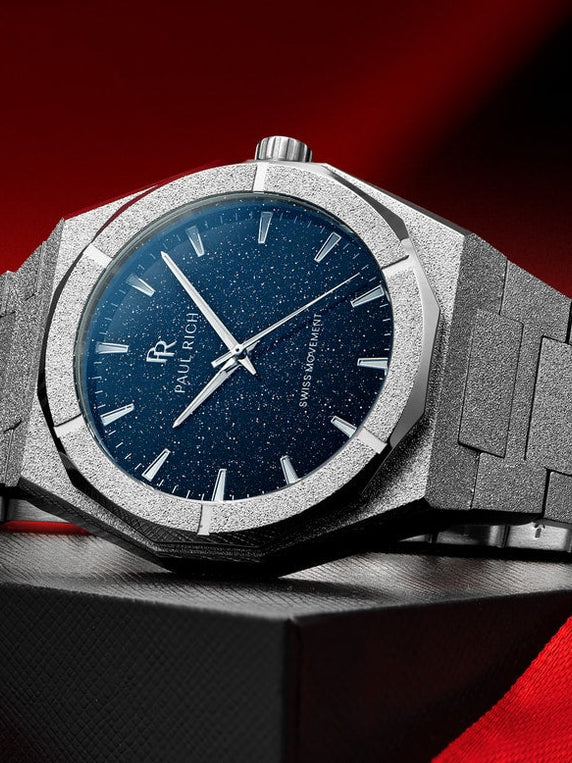
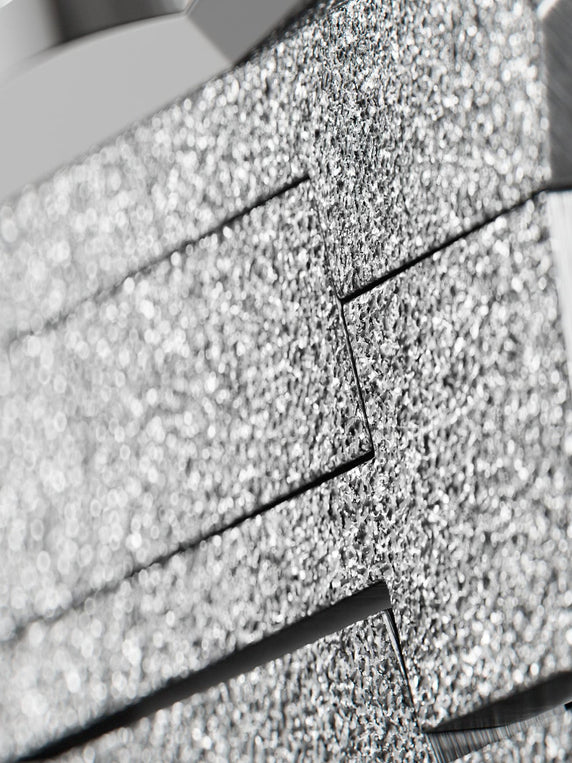
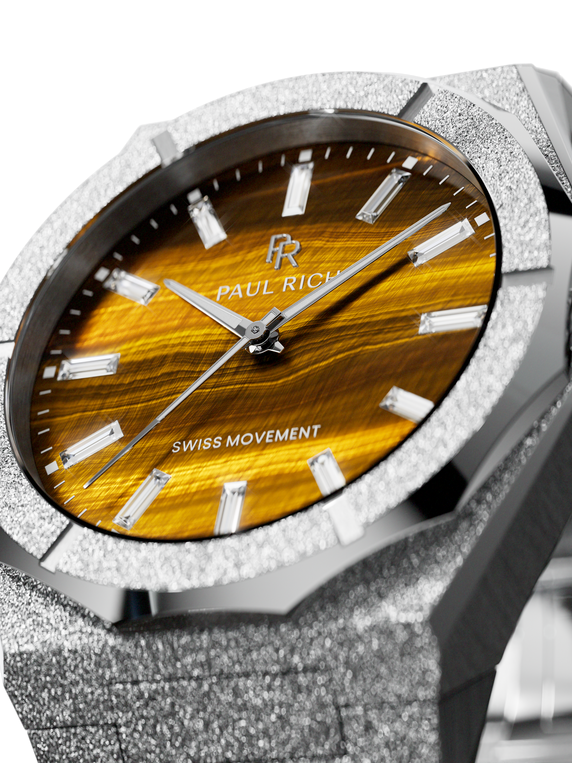
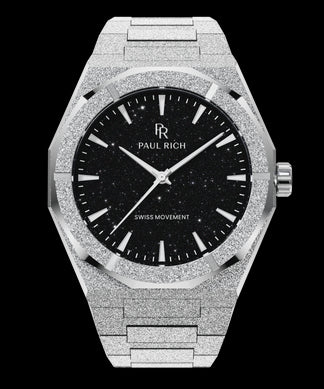
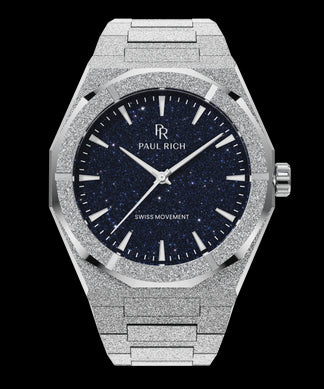
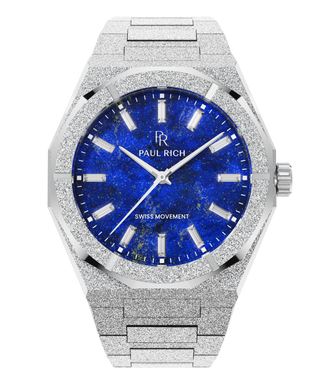
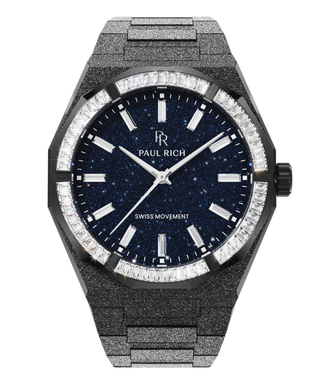
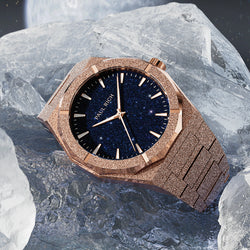
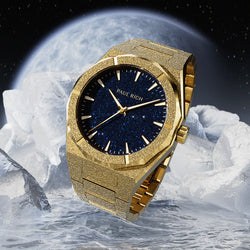
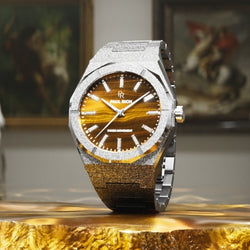
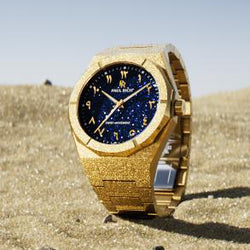
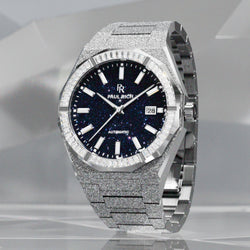
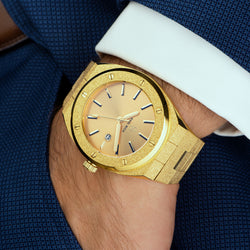
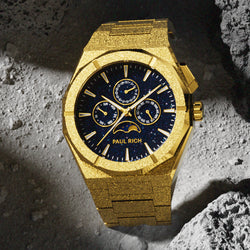
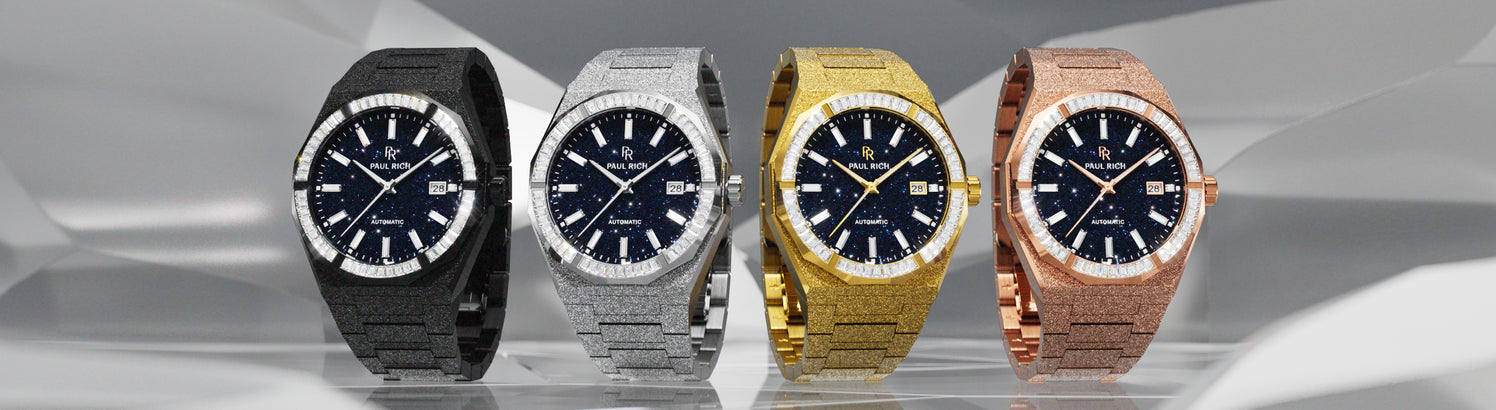
Our frosted models take the case further. Thousands of diamond-cut facets are carved into the steel surface, each catching light like dust frozen mid-spark. The technique creates a texture you can feel and see from across a room — it's not a coating or a finish that wears off. It's cut directly into the metal.
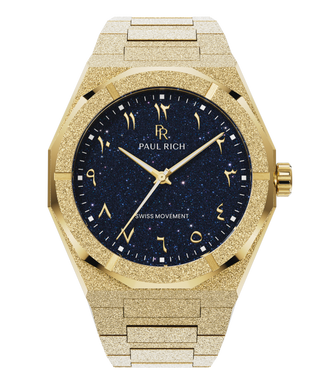
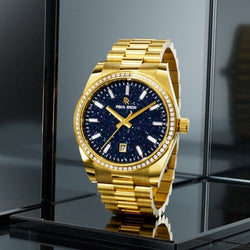
Gold and rose gold models are electroplated with genuine gold over the steel base. The electrochemical bond between metals means the layer doesn't chip or peel — it holds up to daily wear for years.
The Dial: Real Aventurine Stone
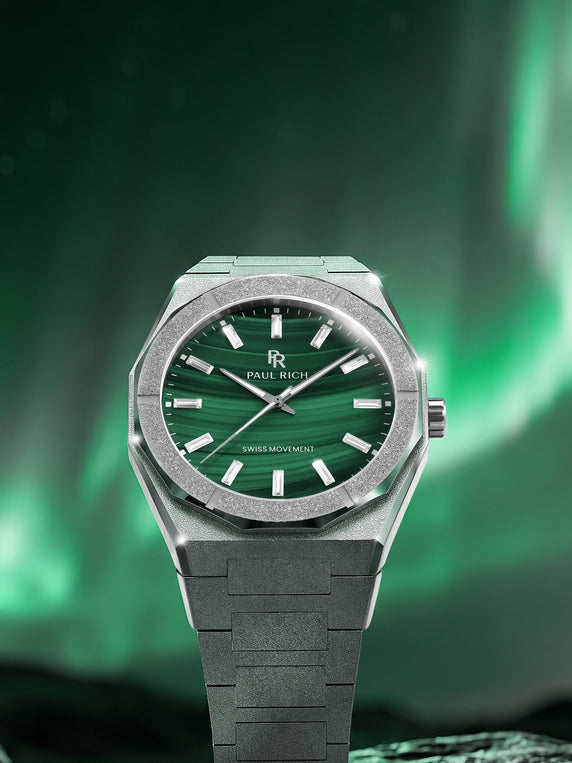
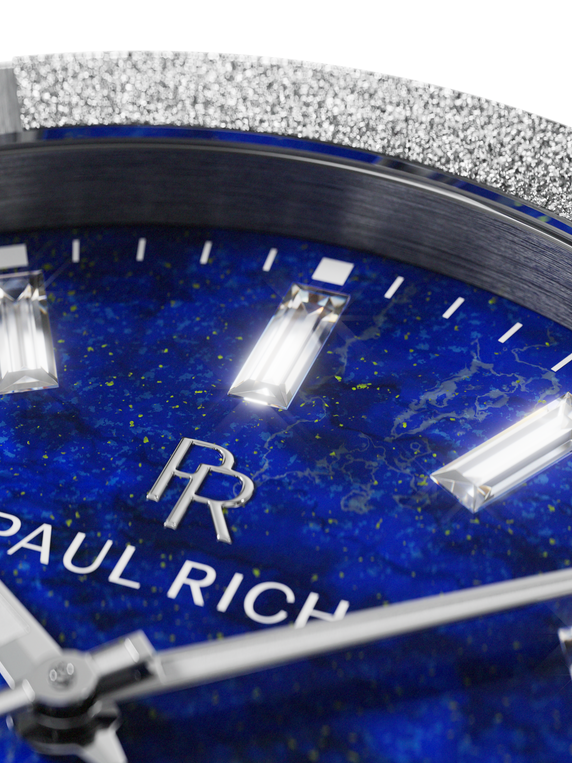
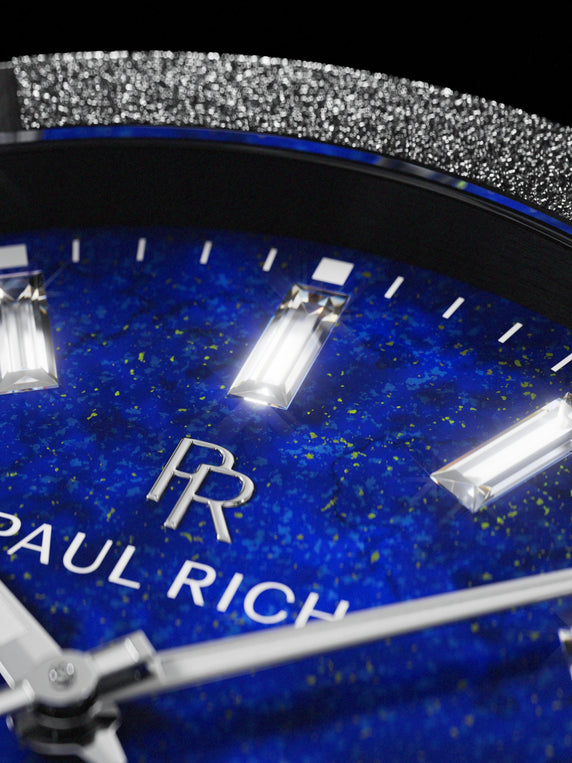
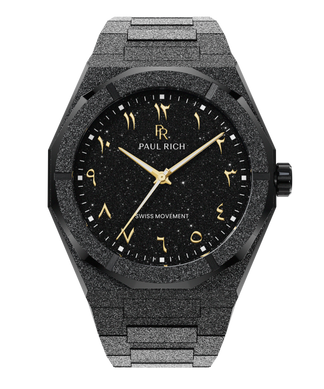
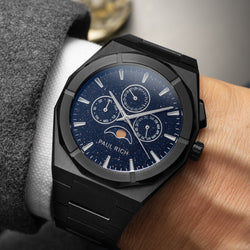
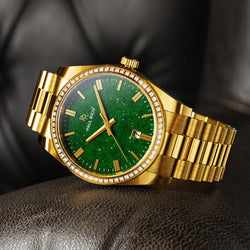
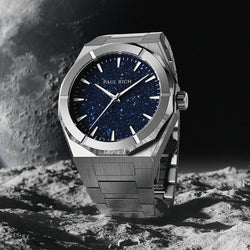
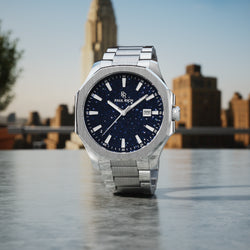
Most watch brands at this price use printed dials — a flat image of a color. We use aventurine, a natural quartz mineral with metallic inclusions suspended inside the stone. When light hits it, copper and silver flecks scatter unpredictably. No two dials reflect light the same way.
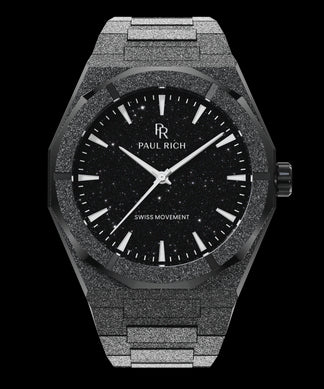
We work with four aventurine colors across our collections: blue (the classic, most common), green (deep forest tones), red (warm copper-amber), and black (the rarest variant — harder to produce and almost never seen in watches at any price). Each dial is hand-selected and cut to fit the case.
The Crystal: Mineral, Sapphire Coating, or Full Sapphire
We use three tiers of crystal protection depending on the collection:
Mineral crystal — standard across most lines (Star Dust II, Astro Classic, Crystal Bay, Crown Legacy, Legacy). Solid, functional glass that handles daily wear.
Sapphire coating on mineral crystal — found on several mid-range models. The coating adds scratch resistance and reduces glare. To be straightforward: sapphire-coated glass will not pass a diamond test, because it's coated with sapphire, not made entirely of it. We'd rather tell you that upfront than have you find out later.
Full sapphire crystal glass — reserved for our highest-tier watches: the Moissanite Frosted Star Dust II, Diamond Astro Skeleton, and Aquacarbon Pro. This is actual sapphire crystal — 9 on the Mohs hardness scale, one step below diamond. Only a diamond or another sapphire can scratch it. On the Moissanite FSDII, sapphire crystal protects both the front dial and the case back. On the Diamond Astro Skeleton, it sits over the skeleton movement and under the lab-grown diamond bezel.
The Movement: Swiss, Japanese, and Automatic
We use three movement types across the line, matched to each collection's purpose:
Swiss Ronda quartz — powers the Astro family. Accurate to within seconds per month, 3+ year battery life, minimal maintenance. The "Swiss Movement" stamp is on the dial.
Japanese quartz — in the Legacy, Crown Legacy, Crystal Bay, and standard Star Dust II lines. Reliable, low-maintenance, consistently accurate.
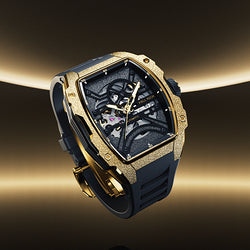
Automatic (self-winding) — available in the Astro Skeleton, Diamond Astro Skeleton, Moissanite FSDII (as a variant option alongside Swiss quartz), and the Aquacarbon Pro (Seiko NH35A). No battery — the rotor winds the mainspring from your wrist movement. The Astro Skeleton and Diamond Astro show the automatic movement working through the open dial and sapphire case back.
The Stones: Moissanite, Lab Diamonds, and CZ
We use three types of stones, and we're specific about which is which:
Moissanite — on the Moissanite Frosted Star Dust II. 5.67 carats total weight of hand-cut moissanite stones covering both the bezel and the dial — a continuous field of light, not just a ring around the edge. Every stone is lab-grown, and the moissanite comes with IGI reports. Moissanite has a higher refractive index than diamond, which means more fire and more brilliance under any light.
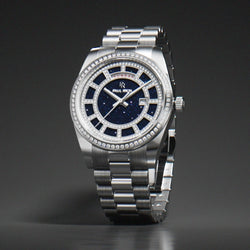
Lab-grown VVS diamonds — on the Diamond Astro Skeleton. Hand-set on the bezel, graded VVS clarity. Lab-grown means identical chemical composition to mined diamonds, without the supply chain markup. The Diamond Astro is our most expensive watch at $1,499 — and the diamond bezel is why.
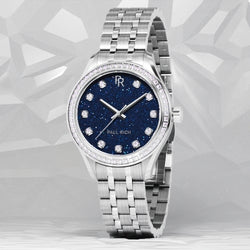
Cubic zirconia — on the Crown Legacy and Legacy collections. Hand-set CZ stones in tight geometric patterns on the bezel and dial. These are not diamonds or moissanite, and we don't pretend they are. At $199–$299, the Crown Legacy delivers a full-pave look with real stone weight at a fraction of what pave-set pieces typically cost.
Water Resistance
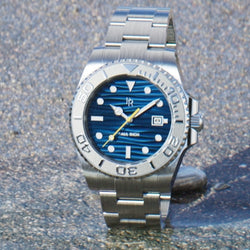
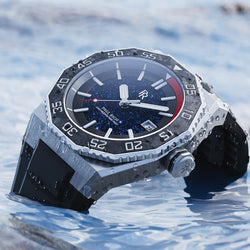
Most Paul Rich watches carry 5 ATM water resistance, and every model's exact rating is listed on its product page. The Aquacarbon Pro goes further: rated to 200 meters (20 ATM) with a forged carbon fiber bezel. That's a proper dive rating.
The Price Range
The full Paul Rich catalog runs from $107 (Icon, our entry-level women's line) to $1,499 (Diamond Astro Skeleton, lab-grown VVS diamonds with automatic movement and sapphire crystal). The most popular price band sits between $249 and $499 — that's where the Frosted Star Dust II ($389), Astro Skeleton ($499), Crystal Bay ($249), and Crown Legacy ($299) live.
We sell direct — no authorized dealers, no department store markups, no middlemen taking a cut. The materials in our watches are found in timepieces that retail for 10–20x more. The difference is distribution, not quality.
What We Don't Do
Every watch in our store started in our design studio, on CAD, by our team. We don't source pre-made watches from third-party factories and slap a logo on them. We don't use stock cases or shared molds. The frosted finish, the aventurine dials, the tonneau-shaped Astro case, the continuous moissanite pave field — these are designs we developed and own.
Over 200,000 watches sold. Rated 4.8 out of 5 across thousands of verified reviews. Those numbers are the result of getting the materials right, pricing them honestly, and shipping them directly to people who care about what's actually on their wrist.