
What Is a Skeleton Watch?
A skeleton watch is a mechanical watch where the dial, case back, or both have been opened up to expose the movement inside. Instead of hiding the gears, springs, and escapement behind a solid dial, the watchmaker removes material from the baseplate and bridges — cutting away everything that isn't structurally necessary — so you can see the mechanics working in real time.
The result is a watch that shows you exactly what it does and how it does it. Every gear mesh, every oscillation of the balance wheel, every rotation of the rotor (in automatics) plays out on your wrist. There's no decorative dial hiding the engineering. The movement is the display.
A Brief History of Skeletonization
The technique dates back to the 1760s, when André-Charles Caron — a Parisian clockmaker — began cutting away excess metal from clock movements to create see-through designs. The goal wasn't decorative. It was a demonstration of skill: removing material without compromising accuracy or structural integrity required deep understanding of how each component bore load and transmitted force.
By the late 18th century, skeletonized pocket watches had become prestige objects among European collectors. The craft demanded that a watchmaker essentially reverse-engineer their own movement, identifying exactly how much metal could be removed from each bridge and plate before the movement lost rigidity. Too much, and the timekeeping suffered. Too little, and the visual effect fell flat.
Through the 19th century, the art of skeletonization spread beyond France. Swiss and English watchmakers adopted the technique, each adding their own finishing traditions — Geneva stripes, perlage, chamfered edges. The skeleton watch became a canvas for decorative finishing as much as a demonstration of mechanical prowess. Some of the most celebrated examples from this period feature hand-engraved bridges with floral or geometric motifs, every cut made with a burin under magnification.
For most of the 20th century, skeleton watches remained in the domain of high horology — hand-finished pieces from Swiss ateliers, priced in the tens of thousands. The complexity of producing them kept volumes low and prices high. That changed as modern manufacturing advanced. CNC machining, laser cutting, and precision casting made it possible to produce skeletonized movements at scale without sacrificing structural accuracy. Bridges could be cut with micron-level precision by machine, then finished by hand — combining production efficiency with craft quality.
Today, skeleton watches span from entry-level automatics to six-figure haute horlogerie, but the principle remains the same: show the movement, hide nothing. The democratization of the format means you no longer need five figures to see the mechanics on your wrist — which has opened the skeleton category to a much wider audience of watch enthusiasts who appreciate exposed movement at accessible price points.
How a Skeleton Watch Works
The mechanics inside a skeleton watch are identical to any mechanical watch. The difference is visibility. Here's what you're actually looking at when you peer through that open dial:
The mainspring barrel stores energy. In an automatic, the rotor — the weighted semicircle that spins when you move your wrist — winds the mainspring continuously. In a hand-wound skeleton, you wind it yourself via the crown.
The gear train transmits that energy from the mainspring through a series of wheels, each one stepping the speed up and the torque down, until it reaches the escapement.
The escapement is the heartbeat. The balance wheel oscillates back and forth — typically 6 to 8 times per second in modern movements — and each oscillation releases one tooth of the escape wheel, metering out energy in precise, controlled increments. This is the ticking you see.
The hands are driven by the final wheel in the gear train, translating those oscillations into the sweep of seconds, minutes, and hours.
In a skeleton watch, the bridges — the metal plates that hold these components in position — have been cut back to their structural minimum. What remains is often engraved, brushed, or finished to highlight the architecture. The visual effect is mechanical depth: layers of moving components at different planes, each visible through the others.
Types of Skeleton Watches
Full Skeleton
Both the front and back are open. The entire movement is visible from the dial side, and flipping the watch reveals the rotor and mainspring through a transparent case back. This is the most dramatic version — the watch reads as a piece of mechanical architecture on the wrist. Full skeletons demand confident finishing, because every surface is exposed. There's nowhere to hide a rough edge or an unfinished bridge.
Semi-Skeleton
Parts of the dial remain intact — usually the outer ring with hour markers — while the center or specific sections are cut away to reveal selected components. Semi-skeletons offer a balance: you get mechanical visibility without losing traditional dial legibility. The hour markers sit on solid ground, making time-reading faster at a glance.
Open Heart
A single window, typically at 12 o'clock or 6 o'clock, exposes the balance wheel. The rest of the dial is conventional. Open hearts give you the most visually active part of the movement — the oscillating balance wheel — framed within an otherwise traditional watch face. It's a controlled reveal rather than a full exposure.
Automatic vs. Quartz Skeleton
Most skeleton watches are automatics, because the whole point is showing mechanical movement. The rotor spinning, the gears meshing, the balance wheel oscillating — these are the visual payoff. Quartz skeleton watches exist, but the effect is fundamentally different: a quartz movement has fewer moving parts, and the stepper motor that drives the hands isn't visually dramatic. If the exposed movement is what draws you to skeleton watches, an automatic is where the action is. (For a deeper comparison, see our guide to automatic vs. quartz watches.)
What to Look for When Buying a Skeleton Watch
Movement Quality
In a skeleton watch, the movement isn't just the engine — it's the main visual element. A poorly finished movement behind an open dial looks worse than it would behind a solid one, because every flaw is magnified. Look for clean edges on the bridges, consistent surface finishing (brushing, sandblasting, or polishing), and smooth gear engagement. In an automatic, watch the rotor spin — it should move freely with a clean, weighted sweep when you tilt your wrist.
The movement type matters too. Japanese automatic calibers like the Miyota 82S0 series or the Seiko NH70 are widely used in skeleton watches under $1,000 and offer reliable performance with visually engaging open architectures. At higher price points, Swiss movements from ETA or Sellita add another layer of finishing and pedigree. Regardless of origin, the movement should run smoothly, keep reasonable time (within a few seconds per day), and offer enough power reserve to last through a night off the wrist — typically 35 to 45 hours for modern automatics.
Crystal
The crystal is literally the window to the movement, so clarity matters more here than on any other watch type. Sapphire crystal glass offers the best scratch resistance and optical clarity — it ranks 9 on the Mohs hardness scale, just below diamond. Mineral crystal glass is a solid alternative at lower price points: harder than standard glass, resistant to everyday scratches, and optically clear enough to appreciate the skeleton movement beneath it.
Case Back
A skeleton watch with a solid case back is a missed opportunity. The best skeleton watches offer a transparent case back — usually sapphire — so you can see the movement from both sides. On an automatic, the case back view reveals the rotor, the mainspring barrel, and the back side of the bridges. It's a different perspective on the same mechanics, and it's where a lot of the finishing detail lives.
Legibility
Full skeleton dials can sacrifice readability. When every layer is transparent, finding the hour hand against a backdrop of spinning gears takes effort. The best skeleton watches solve this with contrasting hand colors, applied hour markers on a skeleton ring, or strategic use of lume. Before buying, ask yourself: can I read the time in two seconds? If not, the dial design needs stronger contrast between hands and movement.
Water Resistance
Skeleton watches are mechanical instruments, and water is the enemy of exposed gears. A rating of 5 ATM (50 meters) is the baseline for everyday confidence — it handles rain, hand washing, and swimming. Below that, you're babying the watch around water, which limits where and when you wear it.
Finishing Details
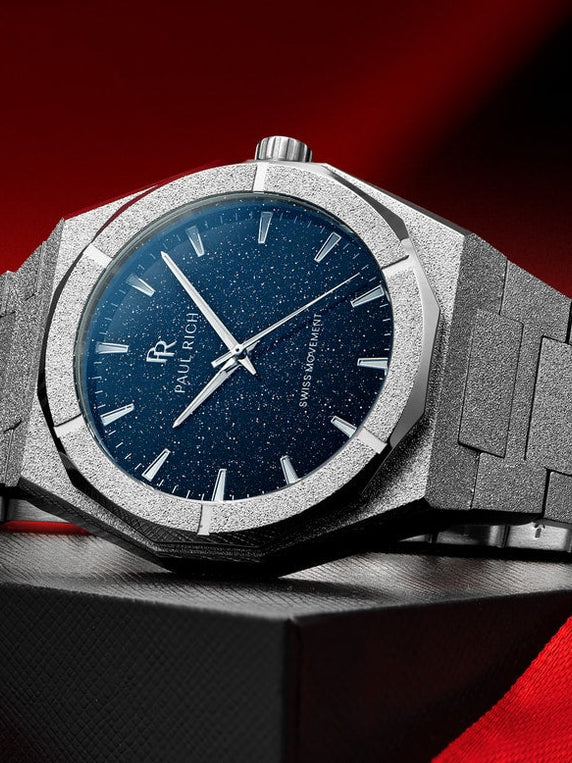
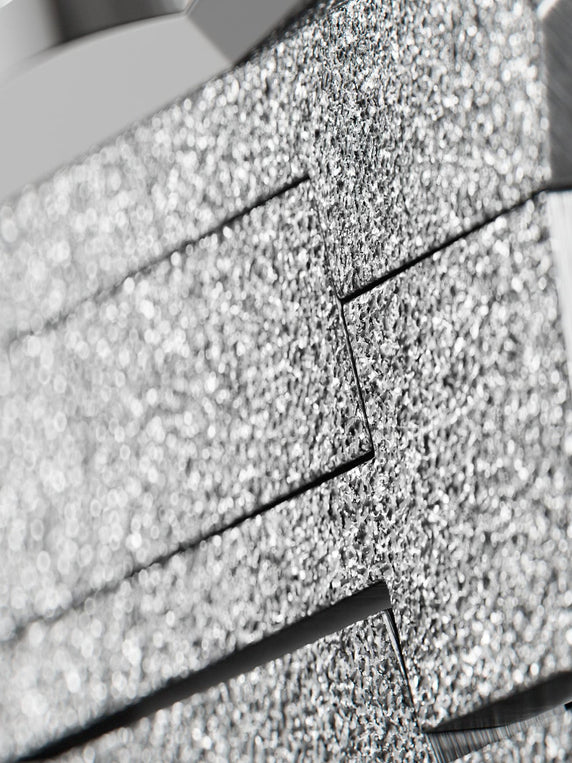
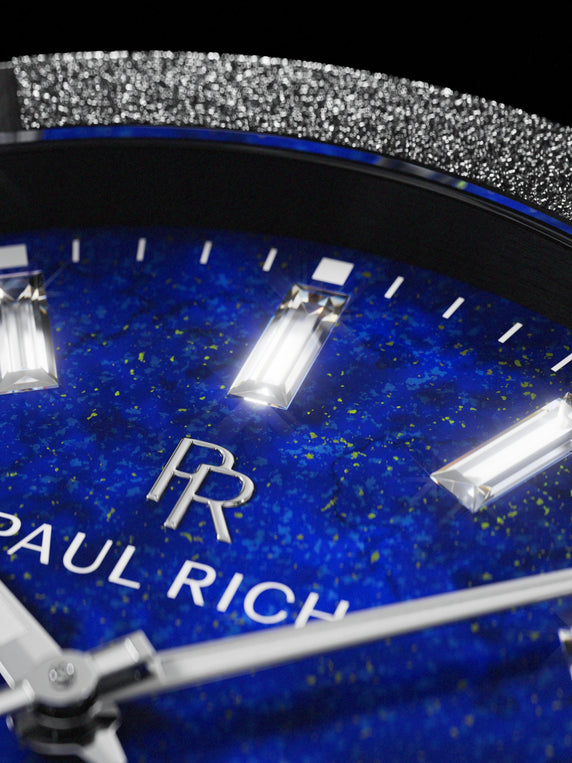
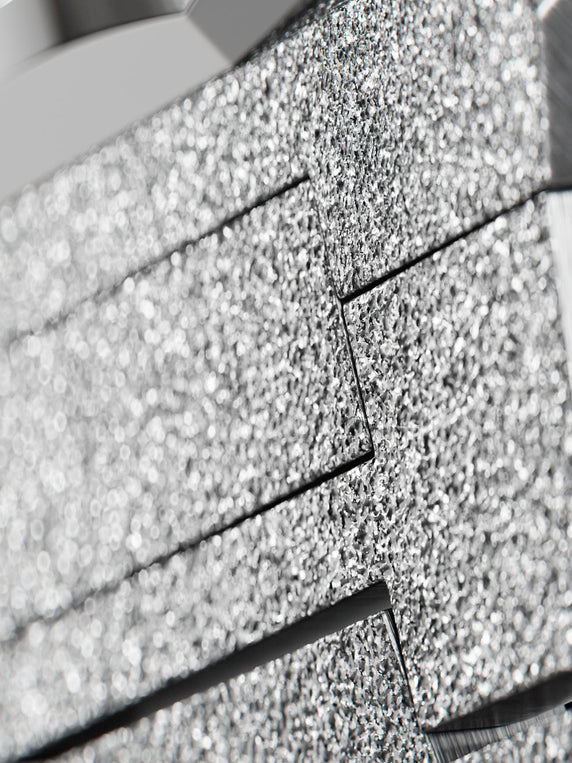
Because so much of the watch is visible, finishing quality has an outsized impact on how a skeleton watch looks and feels. Brushed surfaces scatter light in controlled lines. Polished edges catch it sharply. Frosted textures — like diamond-cut steel — create thousands of light-catching facets across the case and bracelet. These details separate a skeleton watch that looks considered from one that just looks open.
The Paul Rich Astro Skeleton
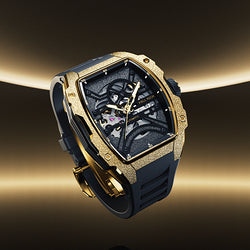
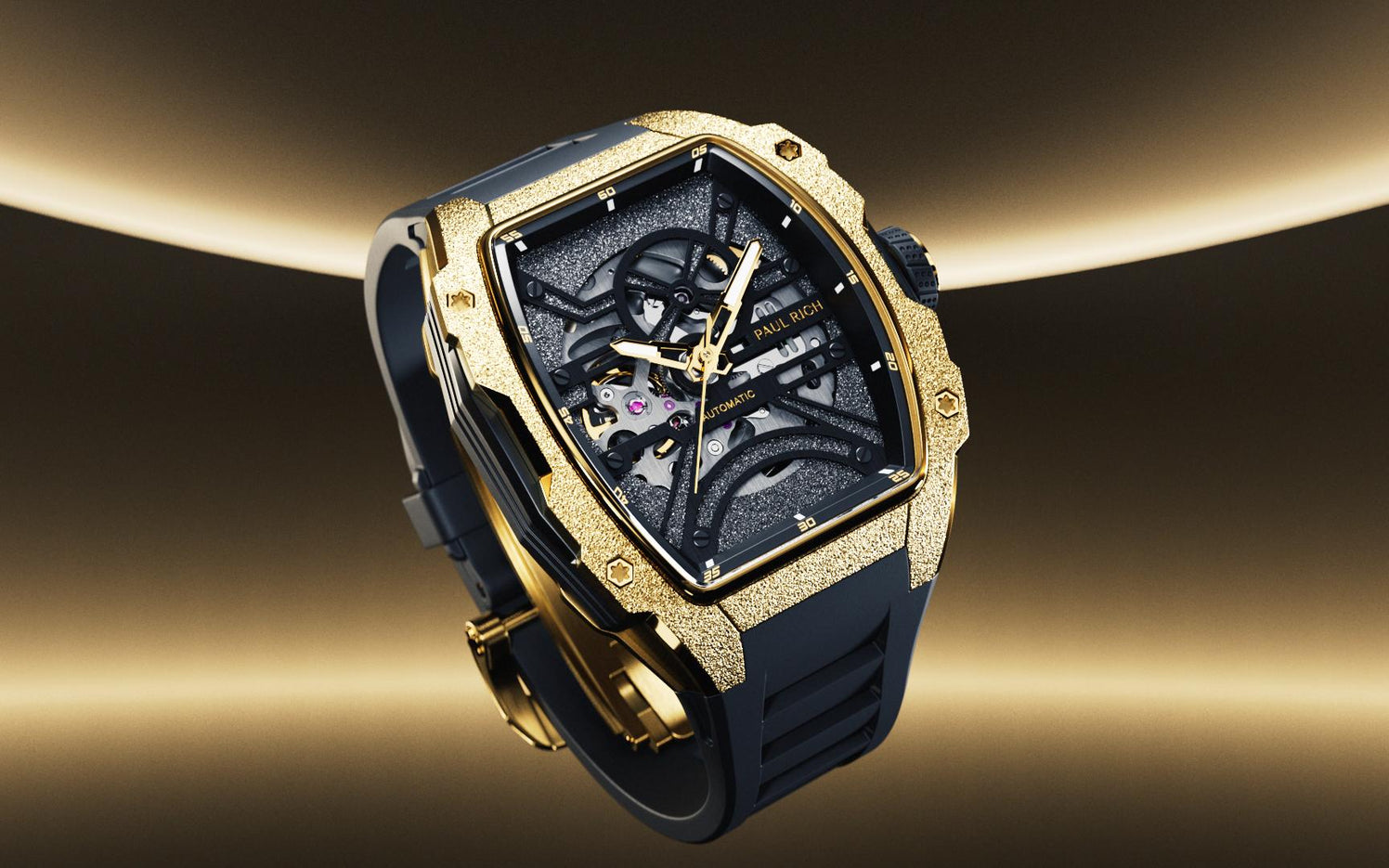
The Astro Skeleton takes a different approach to the skeleton format. Instead of the standard round case, it uses a tonneau shape — a barrel-style case that tapers from 42.5mm, breaking from the round-case convention that dominates the skeleton category. The shape gives the exposed movement a distinct frame: wider at the center, narrowing toward the lugs, with more visual tension than a circle provides.
The skeleton dial is fully open. You see the frosted baseplates and bridges moving in real time — every gear, every spring, every oscillation of the balance wheel. Flip it over, and the open case back shows the automatic rotor winding with each movement of your wrist. Both sides of the watch are displays.
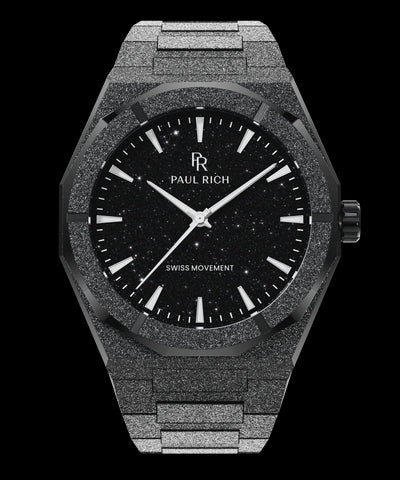
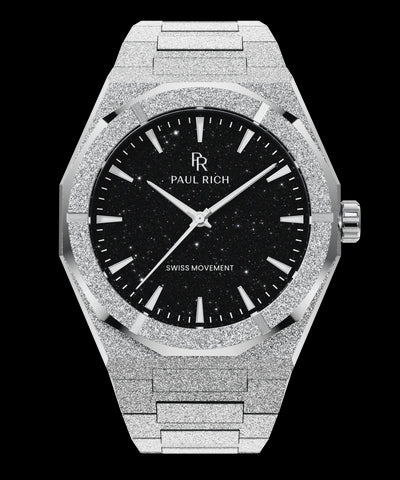
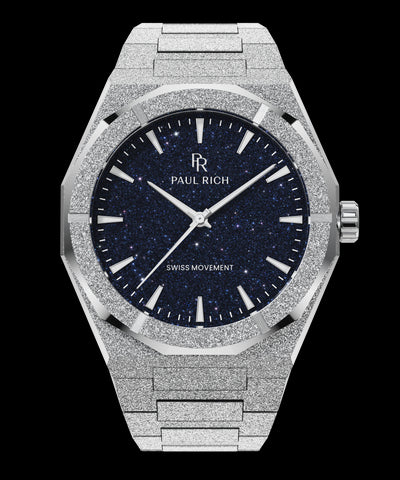
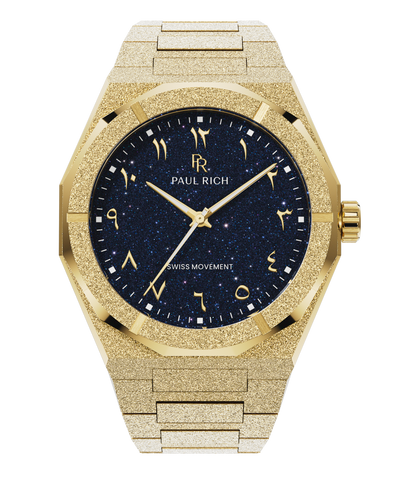
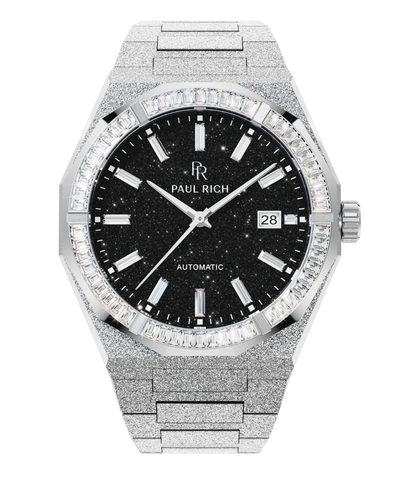
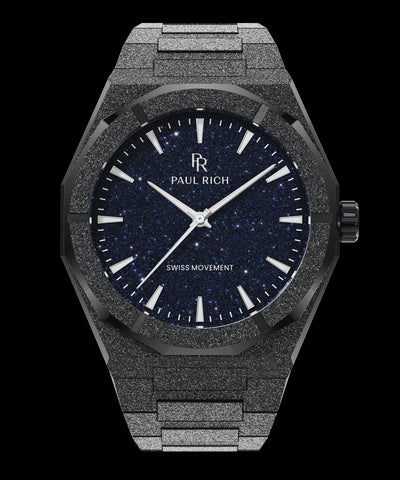
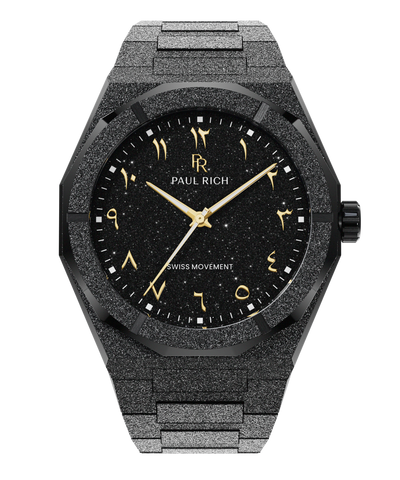
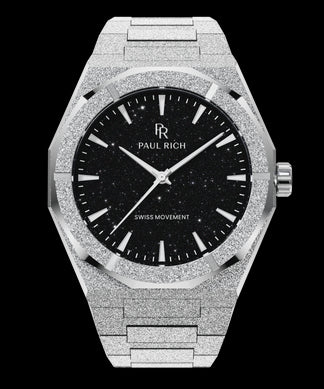
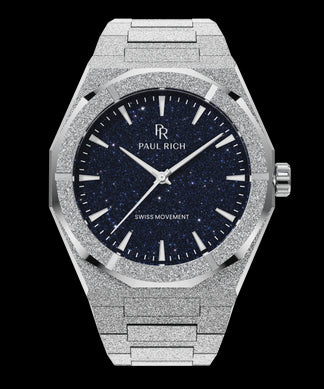
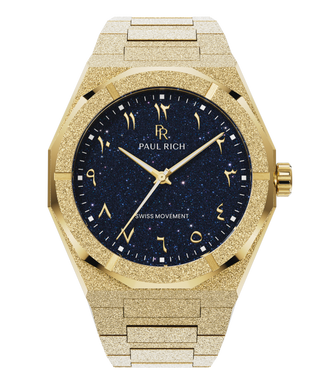
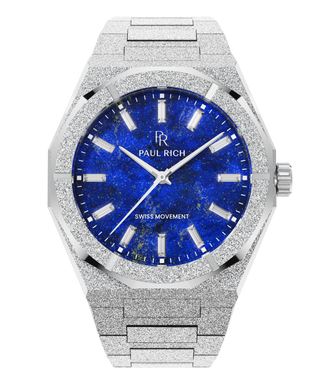
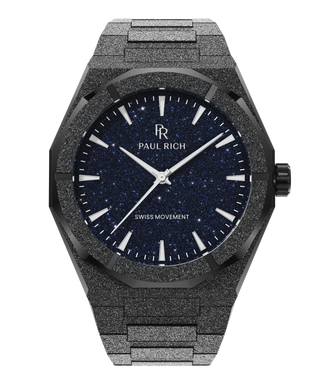
The case is frosted stainless steel — thousands of diamond-cut facets across the surface, each catching light independently. The effect is a controlled shimmer rather than a mirror finish: light scatters in every direction instead of reflecting from a single plane.
Functionally, the Astro Skeleton runs an automatic movement, carries a 5 ATM water resistance rating, and sits on a premium silicone strap with anti-static coating. It's available in five colorways — from silver-tone to gold to black — at $499.
Diamond Astro Skeleton
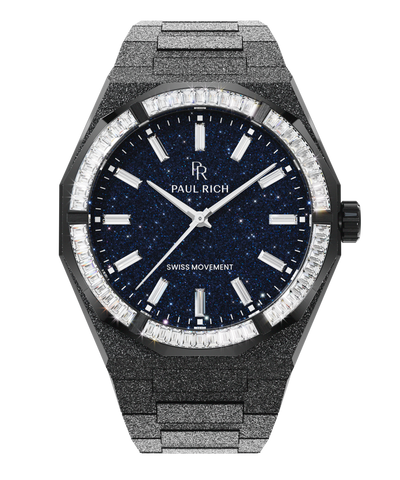
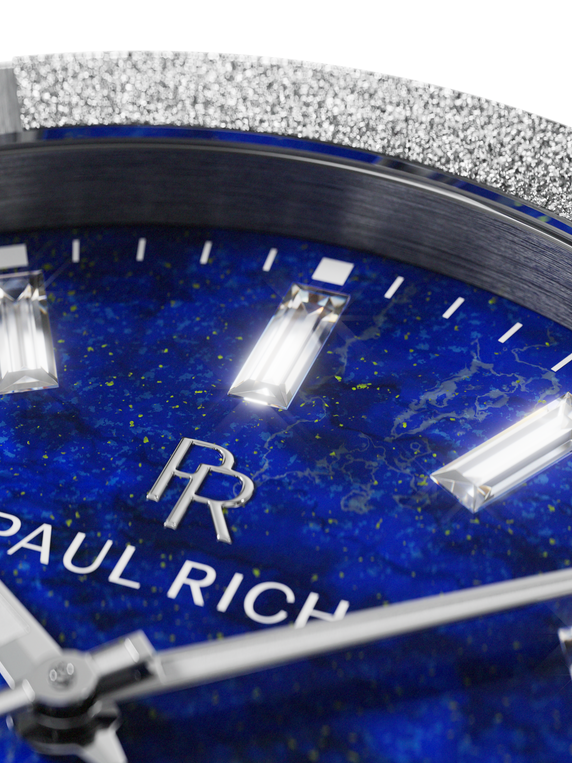
The Diamond Astro Skeleton takes the same tonneau case and open movement, then adds a bezel set with hand-set, lab-grown VVS diamonds. The diamonds are conflict-free, optically identical to mined stones, and throw sharp flashes of light from every angle of the case.
The crystal is upgraded to sapphire — harder, clearer, and more scratch-resistant than mineral glass. The same skeleton dial. The same open case back. The same automatic movement. But the diamond bezel and sapphire crystal push it into a different visual register. It's available in five colorways at $1,499.
Both lines share the core skeleton DNA: fully exposed movement, tonneau case, frosted steel construction. The Diamond Astro adds lab-grown diamonds and sapphire crystal for those who want the skeleton format with more material weight on the wrist.
How to Style a Skeleton Watch
Skeleton watches carry more visual weight than a standard timepiece. The open dial, the visible mechanics, the depth — they draw the eye. That makes them natural centerpieces rather than quiet accessories.
For casual fits, a skeleton watch on a silicone or rubber strap adds mechanical edge without overdressing. The strap keeps it grounded — you get the visual impact of exposed gears without the formality of metal. With a leather jacket, a clean tee, or a rolled-sleeve button-down, the skeleton dial becomes the one piece that says you thought about what you're wearing.
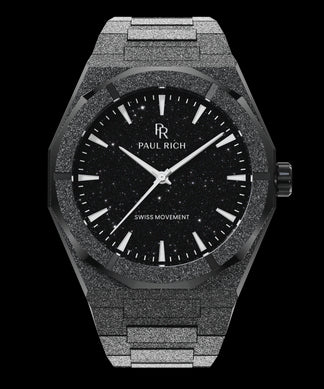
For dressier occasions, a skeleton watch replaces the need for other wrist jewelry. The watch itself is already visually rich — the moving gears, the light-catching bridges, the layered depth. Keep the rest of the wrist clean. A gold-tone skeleton case pairs with warm earth tones and navy. Silver-tone works with grays, blacks, and cooler palettes. Black-on-black skeleton watches are the most versatile — they add mechanical interest without introducing a competing color.
Is a Skeleton Watch Right for You?
Skeleton watches are for people who care about what's inside the watch as much as what's on the outside. If you find yourself drawn to mechanical movement — the visible interplay of gears, the sweep of a rotor, the pulse of a balance wheel — a skeleton watch puts that on permanent display.
They're also statement pieces. A skeleton dial catches attention because it looks different from conventional watches. The depth, the movement, the layered mechanics — people notice. If you want a watch that starts conversations, exposed mechanics do that reliably.
The trade-off is legibility. A skeleton watch will never be as instantly readable as a clean, high-contrast dial with applied markers. You're exchanging some at-a-glance convenience for mechanical transparency. For most wearers, that's a trade worth making — you check your phone for the exact time anyway. The watch is there for everything else.