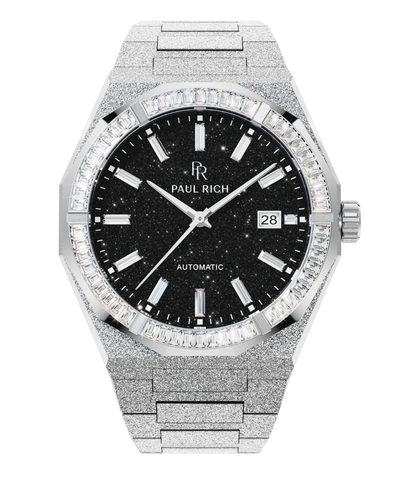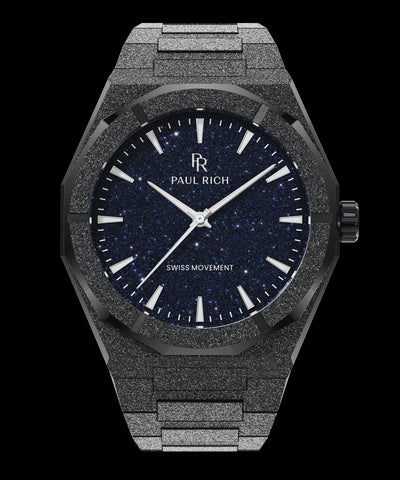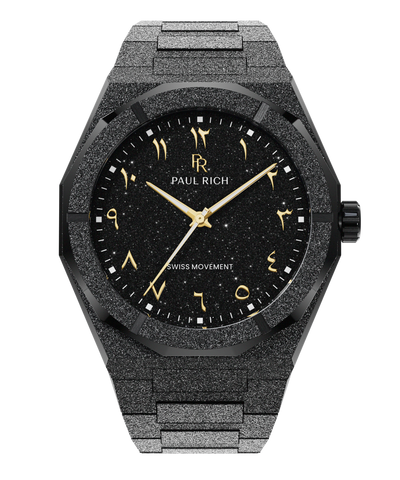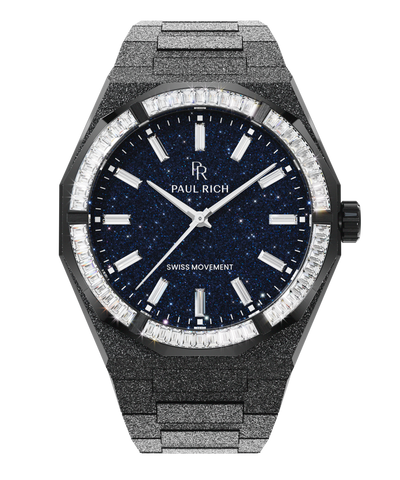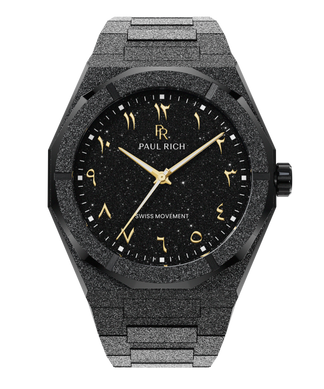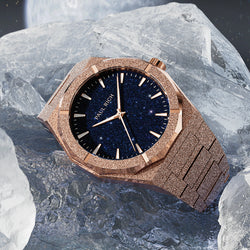
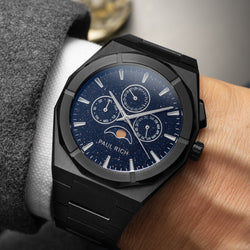
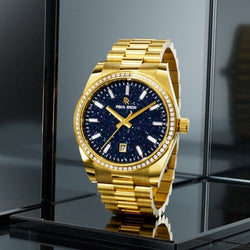


The first time most people encountered forged carbon, they were looking at a Lamborghini. In the late 2000s, Lamborghini's research lab developed a process to mold chopped carbon fiber strands with resin under extreme heat and pressure, creating a material that was lighter and more complex than anything the automotive industry had seen. The result was a marbled, almost geological texture — no two pieces identical — with strength-to-weight properties that made traditional carbon fiber composites look crude by comparison.
That material has since migrated from supercars to aerospace, from Formula 1 to high-end watchmaking. And it is, without exaggeration, the most interesting case material to emerge in the last two decades. Forged carbon watches are no longer a niche curiosity — they represent a fundamental shift in what a watch case can be.
What Is Forged Carbon?
Forged carbon starts as chopped carbon fiber — short strands of carbon filament, typically 3 to 10 millimeters long, mixed with a thermosetting resin. This mixture is placed into a mold and subjected to high pressure and temperature. As the resin cures, the randomly oriented carbon strands create a unique, swirling pattern — part marble, part dark storm cloud, entirely unpredictable.
This is what separates the forged carbon material from standard carbon fiber. Traditional carbon fiber composites use long, woven sheets of carbon filament laid in precise, repeating patterns — that familiar checkerboard or twill weave you see on everything from bicycle frames to laptop shells. It looks technical, but every piece looks the same. A carbon fiber watch using woven sheets will look identical to every other unit from the same production run.
Forged carbon is the opposite. Because the fibers are short and randomly distributed during the compression process, every piece of forged carbon has a one-of-a-kind pattern. Cut two watch bezels from the same batch of material and they will look different. This is not a defect — it is the entire point. You are looking at the natural result of physics acting on thousands of individual carbon strands under pressure.
Forged Carbon vs. Carbon Fiber vs. Ceramic
Three materials dominate the "alternative watch case" conversation right now. Each has trade-offs worth understanding.
| Property | Forged Carbon | Carbon Fiber (Woven) | Ceramic (ZrO2) |
|---|---|---|---|
| Weight | Extremely light (1.4–1.5 g/cm³) | Light (1.5–1.6 g/cm³) | Moderate (5.7–6.0 g/cm³) |
| Scratch resistance | Good — resin surface can mark, carbon underneath is tough | Moderate — epoxy surface scratches | Excellent — near sapphire hardness |
| Shatter resistance | Excellent — absorbs impact | Good — can delaminate under point impact | Poor — brittle, can crack on hard drops |
| Pattern | Unique marbled, every piece different | Uniform weave, repeating | Solid color, no pattern |
| Skin feel | Warm — does not conduct heat | Warm | Cool to the touch, like stone |
| Machinability | Excellent — can be compression-molded into complex shapes | Moderate — wrapping sheets around curves is difficult | Difficult — requires diamond tooling |
The weight difference between forged carbon and ceramic is dramatic. Zirconium oxide ceramic, the standard in brands like Rado and Chanel, is roughly four times denser than forged carbon. A 43mm ceramic watch case sits noticeably heavier on the wrist. Forged carbon practically disappears.
But the real advantage forged carbon holds over ceramic is durability under impact. Ceramic is extremely hard — it resists scratches beautifully — but it is brittle. Drop a ceramic watch on a tile floor and there is a real chance it cracks or shatters. Forged carbon absorbs impact. The randomly oriented fibers distribute force across the entire structure, making it far more resistant to the kind of real-world abuse a watch actually encounters: doorframe hits, desk edges, accidental drops.
Compared to standard woven carbon fiber, forged carbon is easier to manufacture into complex shapes (no need to carefully drape sheets around contours), more isotropic in its strength properties (strong in all directions, not just along the fiber weave), and — most importantly for a watch — far more visually interesting.
Why Watchmakers Are Switching to Forged Carbon
The first luxury watches to use forged carbon came from Audemars Piguet. The Royal Oak Offshore Forged Carbon, released around 2010, put the material on the wrist and proved it could work at the highest level. Panerai followed with their Carbotech line. Richard Mille made it a centerpiece. Today, forged carbon appears across the price spectrum from independent brands to the biggest names in Swiss watchmaking.
The appeal for watchmakers is threefold.
First, weight. A forged carbon watch case can be up to 30% lighter than the same case in stainless steel and dramatically lighter than ceramic. For a dive watch or a sport watch worn during physical activity, this is not trivial. Less weight means less bounce on the wrist, less fatigue during extended wear, and a more comfortable experience overall. Some wearers of 43mm and 44mm steel dive watches find them too heavy for daily use. The same size in forged carbon changes that equation entirely.
Second, uniqueness. Every forged carbon component is genuinely one-of-a-kind. The random fiber distribution means no two bezels, cases, or dials will ever look identical. In an industry where customers are increasingly looking for individuality — something beyond the same watch everyone else on Instagram is wearing — this matters. You do not need a limited edition number to have a unique piece. The material itself guarantees it.
Third, durability. Forged carbon does not corrode. It does not react with sweat, saltwater, or pool chemicals. It is non-magnetic, which means it will not affect the accuracy of the movement inside. And its impact resistance makes it well-suited for tool watches — watches designed to actually be used, not just displayed. A dive watch with a forged carbon bezel can take the kind of knocks that would leave marks on steel or crack ceramic.
Forged Carbon Watches at Every Price Point
The material started in watches priced well above $20,000 and stayed there for years. That exclusivity is eroding — quickly.
At the top end, Audemars Piguet still leads with Royal Oak Offshore models featuring full forged carbon cases, often paired with ceramic pushers and titanium components. Prices range from $30,000 to well over $50,000. Panerai's Submersible Carbotech line sits in the $15,000 to $25,000 range, using their proprietary version of forged carbon with carbon fiber sheets compressed at controlled temperatures.
Richard Mille has pushed forged carbon further than anyone, using it not just for cases but for baseplates and bridges within the movement itself. Their forged carbon watches start around $150,000 and climb to seven figures. This is engineering excess, but it demonstrates the material's versatility.
In the $1,000 to $5,000 range, brands like Hublot (Spirit of Big Bang), TAG Heuer (Carrera Carbon), and Tudor (Pelagos FXD Carbon) have introduced forged carbon elements — typically bezels or case components rather than full cases. These represent the material's move into the mainstream luxury segment.
Below $1,000, forged carbon watches have been rare until recently. The manufacturing process requires specialized tooling, and the forged carbon material science expertise needed to produce consistent results has historically been concentrated at the top of the market. But that barrier is falling as more suppliers develop forged carbon capabilities and watchmakers gain experience working with it. The result is that you can now find a genuine carbon fiber watch — not a printed pattern, but actual forged carbon — at prices that would have been unthinkable five years ago.
Aquacarbon Pro: Forged Carbon Meets the Dive Watch
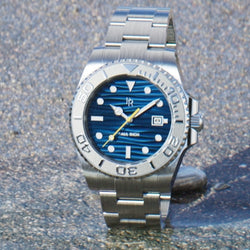
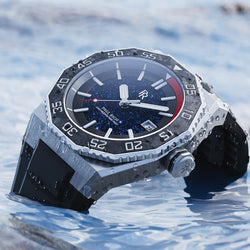
We built the Aquacarbon Pro because we wanted a dive watch where the material was the story. Not a steel watch with carbon fiber printed on it. Not a fashion piece pretending to be a tool watch. A proper 200-meter dive watch with a genuine forged carbon fiber bezel, sapphire crystal, and the kind of build quality that does not apologize for its price.
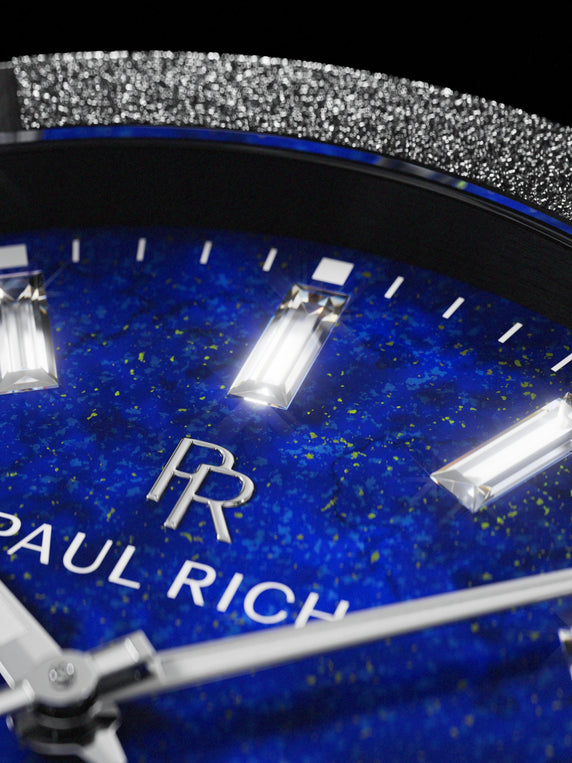
The specs are straightforward. The case is 43mm stainless steel with a forged carbon bezel insert — every bezel pattern unique. The dial is available in two versions: aventurine, which contains actual mineral flakes that shimmer under light, and sunburst, a classic radiating finish. Sapphire crystal glass covers the dial — 9 on the Mohs hardness scale, the same material used in Rolex and Omega.
For the movement, you choose: the Swiss Ronda 505 quartz for accuracy and zero maintenance, or the Seiko NH35A automatic for those who want a mechanical heart. The NH35A is a workhorse — 41-hour power reserve, 21,600 vibrations per hour, hacking and hand-winding capability. It is the same caliber trusted by dozens of microbrand makers and modified by watchmakers worldwide. The automatic version ships with an exhibition caseback so you can see the movement at work.
Water resistance is rated to 200 meters (20 ATM). That is not a splash rating or a "do not submerge" disclaimer. Two hundred meters means a screw-down crown, gaskets rated for real submersion, and pressure testing. It is the same standard applied to the Rolex Submariner and the Omega Seamaster. You can swim, dive, snorkel, and shower without thinking about it.
The strap is premium rubber — specifically chosen over steel bracelets for a dive watch because rubber does not corrode in saltwater, dries instantly, and pairs with the lightweight forged carbon aesthetic. The overall weight comes in at 103 grams for the quartz version and 128 grams for the automatic — lighter than most 43mm steel dive watches by a meaningful margin.
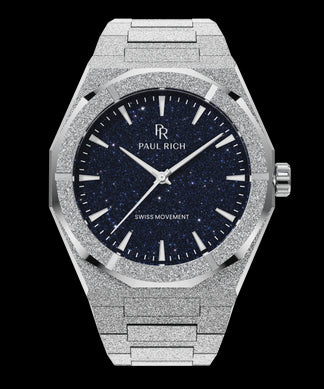
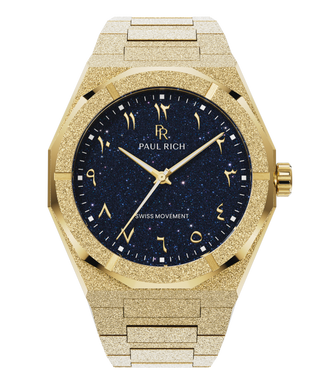
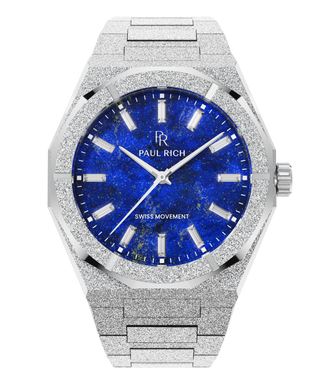
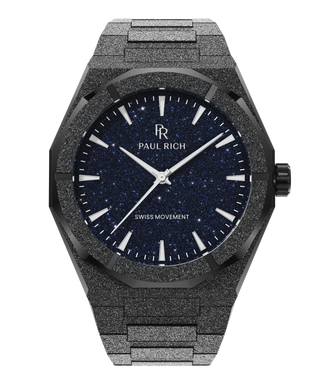
The Aquacarbon Pro is available in six colorways: Imperial Gold, Sunset Gold, Forged Grey, Midnight Silver, Shadow Black, and Horizon Blue. Each colorway comes in both aventurine and sunburst dial options, with both quartz and automatic movements. That is 24 possible configurations from a single collection. Quartz starts at $399. Automatic starts at $499.
We are not pretending this competes with an Audemars Piguet on finishing or with a Panerai on brand heritage. That is not the point. The point is that forged carbon — a material that spent its first decade exclusively in six-figure supercars and five-figure watches — is now accessible in a properly built dive watch at a price that does not require financing. The material is the same. The manufacturing process is the same. The marble-like pattern on your bezel is still unique to your watch and your watch alone.
Is Forged Carbon the Future?
Materials in watchmaking follow a pattern: they start at the top, prove themselves, and then filter down. Sapphire crystal was exotic in the 1970s. Ceramic bezels were a luxury-only feature fifteen years ago. Titanium was rare outside of military watches until the 2000s. Each of these materials is now standard across the industry.
Forged carbon is following the same trajectory. The manufacturing costs are dropping. The supply chain is maturing. And the properties of forged carbon material — lightweight, impact-resistant, corrosion-proof, visually unique — are exactly what modern watch buyers are asking for. It solves real problems that steel, ceramic, and aluminum do not. The question is no longer whether forged carbon watches will become mainstream, but how quickly.
The watches that will define the next decade will not just be about movements or complications. They will be about materials — what the case is made of, how it feels on the wrist, how it holds up after five years of daily wear. Forged carbon is not a trend or a gimmick. It is an engineering material with properties that make it objectively superior to steel for certain applications, and watchmaking is one of them.
Whether you are buying your first serious watch or adding to a collection, a forged carbon watch is worth understanding. Not because it is new — the technology is over fifteen years old. But because it is finally available at prices that make it a real option. The carbon fiber watch you could only dream about a decade ago is now something you can actually wear.
Related Reading
- Watch Water Resistance Explained — What 200m actually means and how pressure testing works.
- Are Paul Rich Watches Good? — An honest look at what we build and who it is for.
- Automatic vs. Quartz Watches — The complete breakdown of both movement types.