

A watch bracelet does more than hold a watch on your wrist. It determines how the watch sits, how it feels through a full day of wear, how it catches light, and whether the overall look reads casual or dressed up. Most buyers spend their time comparing dials and bezels, then end up wearing a bracelet they never thought about for years. That is a mistake.
Here is a breakdown of the six main watch bracelet types, what makes each one different, and how to decide between a bracelet and a strap.
The 6 Main Watch Bracelet Types
Oyster (3-Link) Bracelet
The oyster bracelet is the most common metal bracelet in watchmaking. Rolex introduced it in the 1930s, and the basic design has barely changed because there was nothing wrong with it in the first place. Three flat links sit side by side — one wider center link flanked by two narrower outer links. The result is a clean, sporty profile that sits flat against the wrist without bunching or sagging.
What makes the oyster work is simplicity. Flat links distribute weight evenly, the bracelet tapers slightly from the case to the clasp for a balanced feel, and the overall look is understated enough to wear with anything from a t-shirt to a suit. This is the default sporty bracelet for a reason.
If a watch comes on a brushed steel bracelet with three distinct link columns, you are looking at an oyster or a close variation of one. It is the default for dive watches, tool watches, and everyday sport watches across nearly every brand.
Jubilee (5-Link) Bracelet
The jubilee bracelet uses five links across its width instead of three, creating a more fluid, articulated feel on the wrist. Rolex originally designed it in 1945 for the Datejust, and the style has since become shorthand for "dress sport" in the watch world. The extra links make the bracelet more flexible, which means it drapes over the wrist rather than sitting rigidly on top of it.
The visual difference is immediate. A jubilee catches light differently than an oyster — more surfaces, more angles, more movement as the links shift. It reads as slightly dressier without crossing into formal territory. The comfort advantage is real too: the increased articulation means fewer pressure points, especially on smaller or flatter wrists.
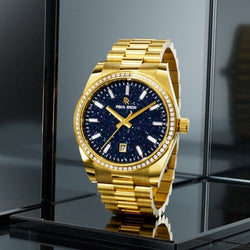
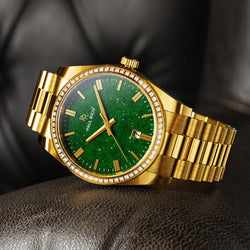
Jubilee bracelets tend to appear on watches that split the difference between sport and dress — day-date watches, stone-set bezels, aventurine dials. The bracelet's fluid link pattern complements detail-heavy dials without competing for attention.
President Bracelet
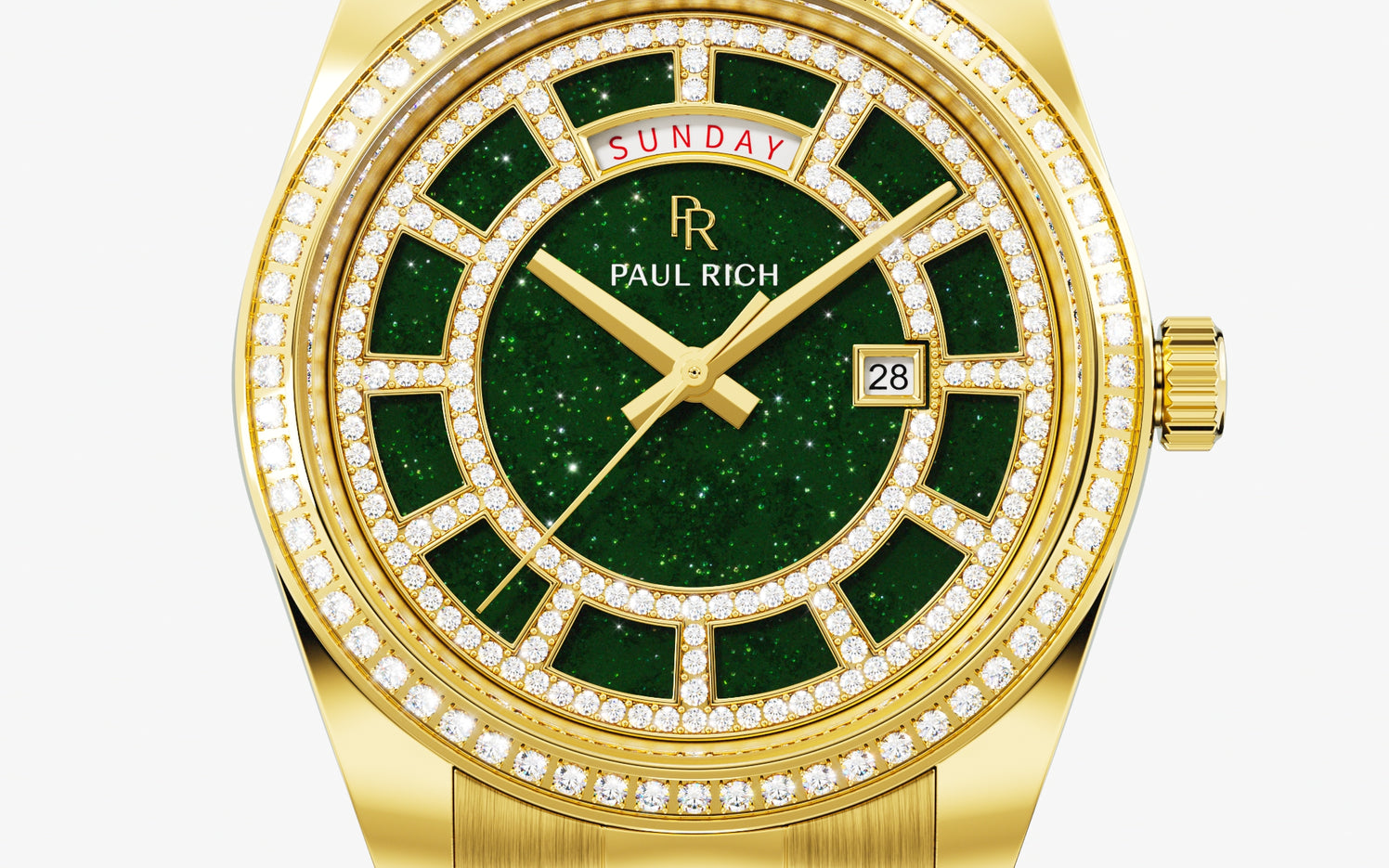
The president bracelet takes the dress concept further. It features three rounded, semi-circular links that create a smooth, almost seamless surface when the bracelet is closed. Rolex introduced it in 1956 alongside the Day-Date, and the design was meant to feel as premium as possible — originally available only in precious metals.
In terms of feel, the president is heavier and more rigid than a jubilee. The rounded links sit tighter together, giving the bracelet a solid, sculptural quality. It is a statement bracelet — the kind you wear when you want the bracelet itself to be noticed.
The tradeoff is flexibility. President bracelets do not articulate as freely as jubilee or oyster styles, which means they can feel stiff on some wrist shapes. They work best on formal or high-impact watches — pavé bezels, precious metals, bold color combinations.
Mesh / Milanese Bracelet
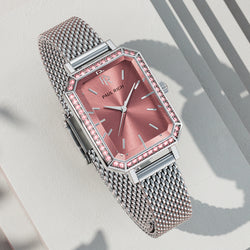
A mesh bracelet is woven from fine metal wire into a flat, flexible sheet. The result looks and feels completely different from any link bracelet — think chainmail, but refined. Milanese mesh (named after the metalworking tradition in Milan) is the most common version, using a tight interlock weave that creates a smooth, shimmering surface.
Comfort is the mesh bracelet's strongest selling point. The continuous weave flexes uniformly across the wrist — no gaps, no pinch points, no stiff spots. Most mesh bracelets use a sliding clasp rather than fixed link removal, so you can dial in the exact fit in seconds. The look is distinctly retro-modern, pairing naturally with thinner, dressier watch cases and minimal dials.
Integrated Bracelet
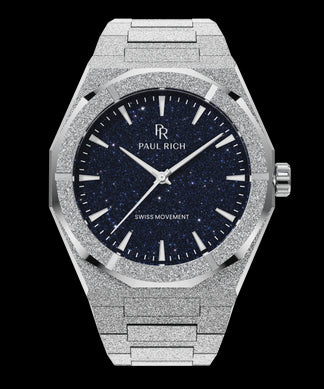
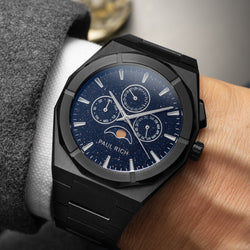
An integrated bracelet is designed as a single visual unit with the watch case — the bracelet flows directly from the case without visible lugs or an obvious transition point. The most famous example is the Audemars Piguet Royal Oak, designed by Gerald Genta in 1972, where the octagonal bezel and integrated bracelet form one continuous shape.
The appeal is architectural. An integrated bracelet makes the watch look like a single object rather than a head attached to a band, creating a strong, cohesive silhouette on the wrist. The downside is zero strap flexibility — you cannot swap it for leather or rubber. The watch and bracelet are a package deal, and they appear almost exclusively on sport-luxury watches with angular case designs.
Beads-of-Rice Bracelet
The beads-of-rice bracelet uses rows of small, rounded links resembling grains of rice. Each link is subtly domed, creating a textured surface that catches light very differently than flat oyster or jubilee links. This pattern was common on mid-century dive watches and dress watches from the 1950s through the 1970s. You will not find it on many new watches, but it shows up as aftermarket replacements and on heritage-inspired releases. The rounded links conform to the wrist more naturally than flat links, making this a surprisingly comfortable — and characterful — option.
How Bracelet Type Affects Comfort and Style
The physical differences between bracelet types come down to three factors: link size, flexibility, and weight distribution.
Link size determines how the bracelet conforms to your wrist. Smaller links (jubilee, beads-of-rice) flex more freely and drape closer to the skin. Larger links (oyster, president) hold their shape more rigidly, which creates a sturdier feel but less natural movement. If you have a flat or bony wrist, smaller links generally feel better because they fill gaps instead of bridging over them.
Flexibility is about how many pivot points exist per unit of length. A five-link jubilee bracelet has significantly more articulation than a three-link oyster, which is why the jubilee tends to feel softer on the wrist even at a similar weight. Mesh bracelets take this to the extreme — infinite flex points, which is why they are often described as the most comfortable option available.
Weight distribution matters more than total weight. A heavy watch on a wide, flat bracelet distributes load across a broad area, so it feels lighter than it actually is. A narrow bracelet concentrates weight into a smaller contact patch, causing the watch to shift and slide. This is why tapered bracelets — wider at the lugs, narrower at the clasp — feel more balanced than straight-width designs.
Style-wise, the general rule is straightforward. Oyster reads sporty. Jubilee reads versatile. President reads formal. Mesh reads sleek. Integrated reads modern. But these are starting points, not rules — a jubilee bracelet on a bold, stone-set watch reads very differently than a jubilee on a plain dress watch.
Bracelet vs. Strap: When Each Makes Sense
Metal bracelets are not always the right call. Here is when the alternatives win.
Leather straps remain the default for true dress watches. A leather strap is thinner, lighter, and more formal than any metal bracelet. The tradeoff is durability: leather absorbs sweat, stains over time, and needs replacement every one to two years with regular wear. If you wear a watch primarily in professional or formal settings, leather is a strong choice.
Rubber and silicone straps dominate the sport and dive category. They are water resistant, lightweight, easy to clean, and virtually indestructible. Modern rubber straps have come a long way — many now feature textured surfaces, deployant clasps, and anti-static coatings that rival metal bracelets in perceived quality. For any watch that regularly sees water or sweat, rubber is the practical winner.
NATO and single-pass straps are the casual, no-commitment option. A NATO threads under the watch, adding a second layer of security if a spring bar fails. They are cheap, easy to swap, and come in every color imaginable. The downside is bulk — a NATO adds thickness between the watch and your wrist. They work best on field watches and weekend pieces.
Most watch wearers eventually own both bracelets and straps. A steel bracelet for everyday wear, a leather strap to dress it up, maybe a rubber option for travel. If your watch has standard lugs (not an integrated bracelet), this versatility is one of the best investments you can make.
How to Size and Adjust a Watch Bracelet
A bracelet that is too loose slides around and bangs into things. Too tight and it digs into your skin. The sweet spot: you should be able to slide one finger between the bracelet and your wrist without forcing it.
Removing Links
Most metal bracelets are sized by removing links. Each removable link has a small pin or screw holding it in place. Screw-type links are straightforward — unscrew from the marked side, slide the link out, reconnect. Pin-type links require a pin pusher tool to drive the pin out in the direction indicated by an arrow on the link. Remove links evenly from both sides of the clasp to keep it centered on the underside of your wrist.
Micro-Adjust Clasps
Many modern bracelets include a micro-adjust feature — small holes or a ratcheting mechanism on the clasp that lets you fine-tune the fit by 1-2mm per position without removing links. Your wrist changes size throughout the day with heat and activity, so this feature is more useful than it sounds. If you are choosing between two watches and one has micro-adjust, give that one extra weight in your decision.
If you are not comfortable pushing pins or handling small screws, any jeweler or watch shop can size a bracelet in under ten minutes, usually for free or a minimal fee.
Paul Rich Bracelet Styles by Collection
We use different bracelet and strap types across our collections because each watch has a different job to do on the wrist. Here is what you will find.
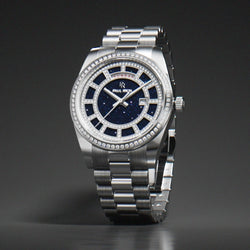
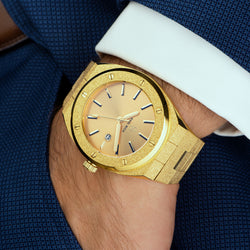
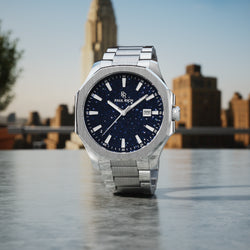
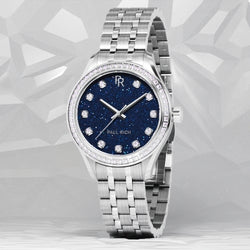
The Legacy and Crown Legacy collections feature a jubilee-style bracelet — five-link construction with fluid articulation and polished edges. On the Legacy, the bracelet pairs with a stone-set bezel and aventurine or sunburst dial for a clean, versatile everyday look. On the Crown Legacy, the same jubilee base gets elevated with hand-set cubic zirconia across the bracelet links, bezel, and pavé dial. Both sit flat and comfortable on the wrist, with solid weight that feels intentional.
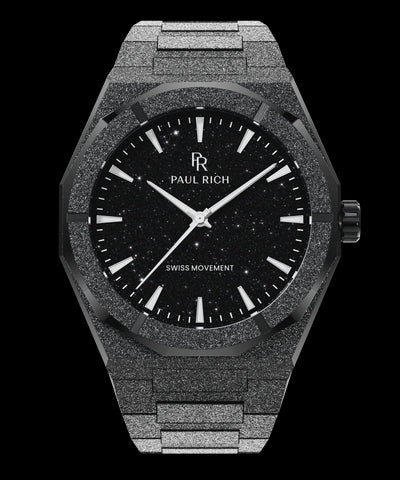
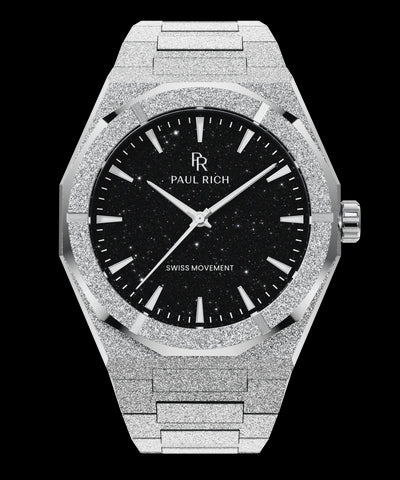
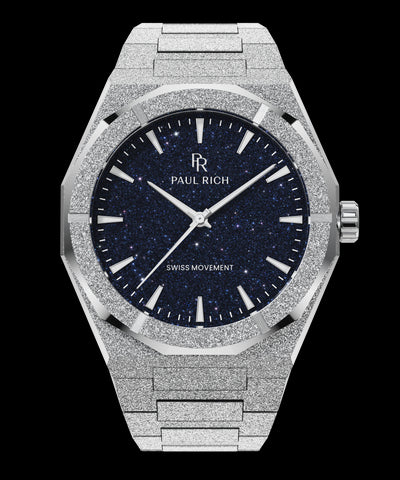
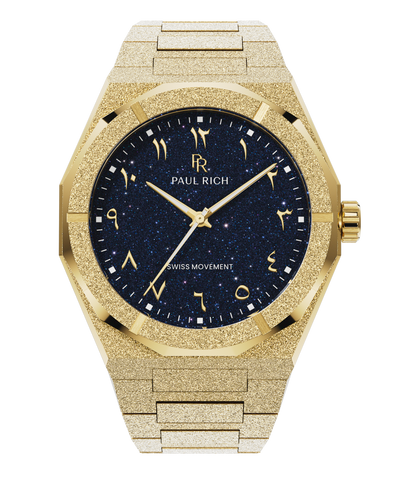
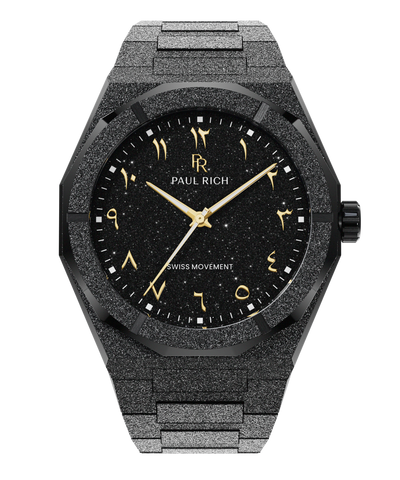
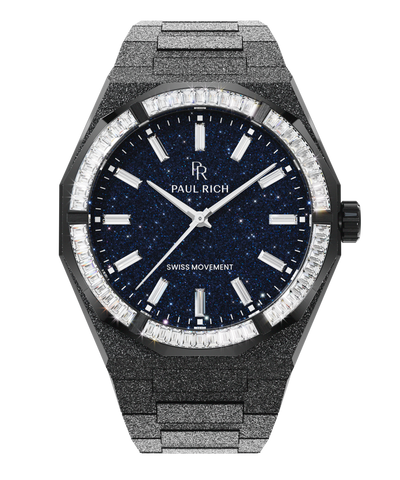
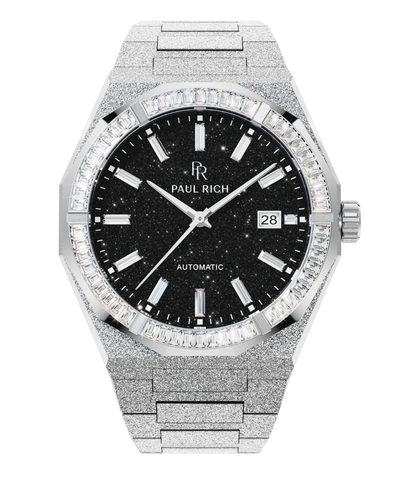
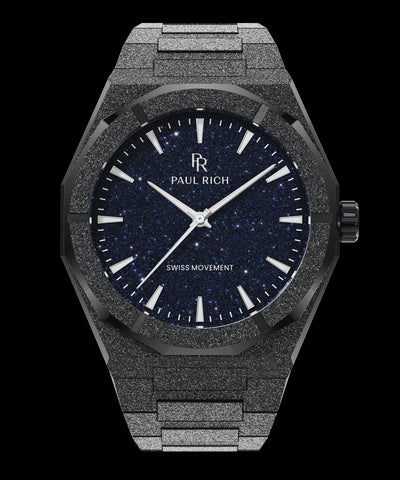
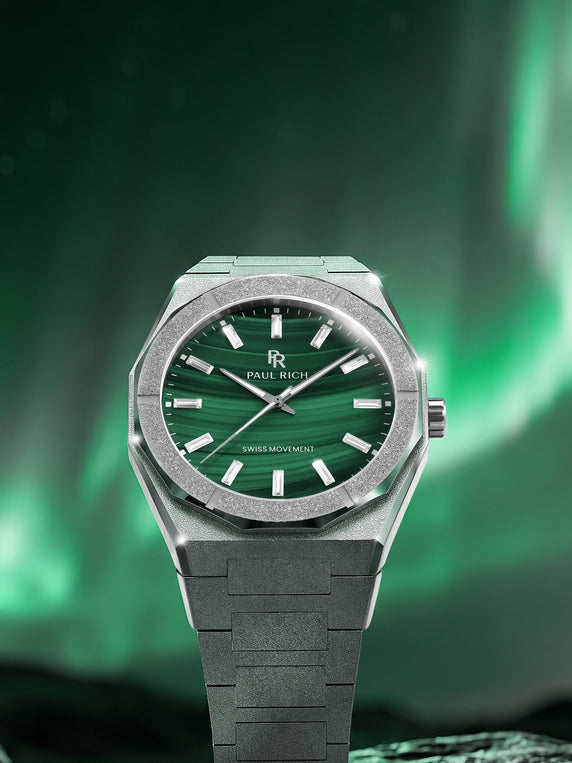
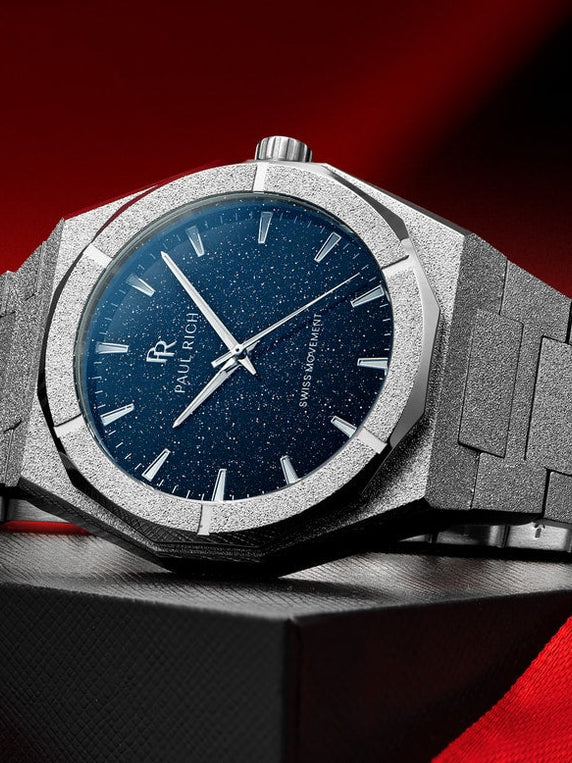
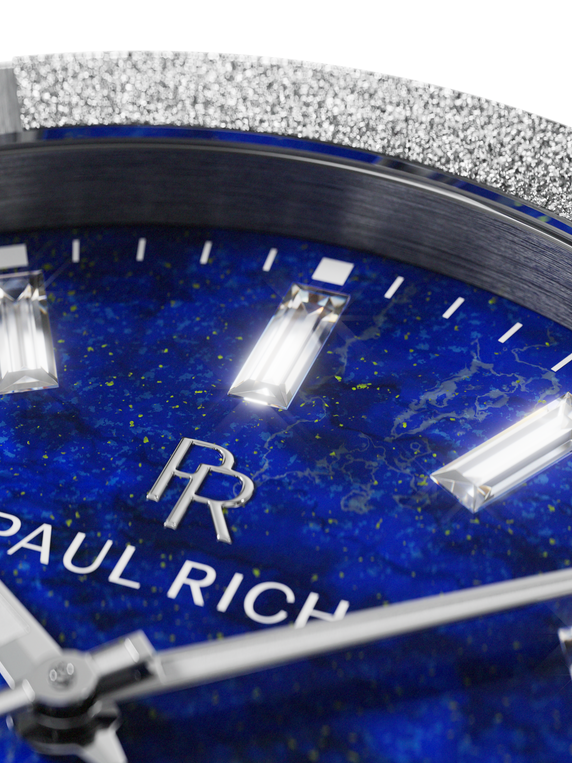
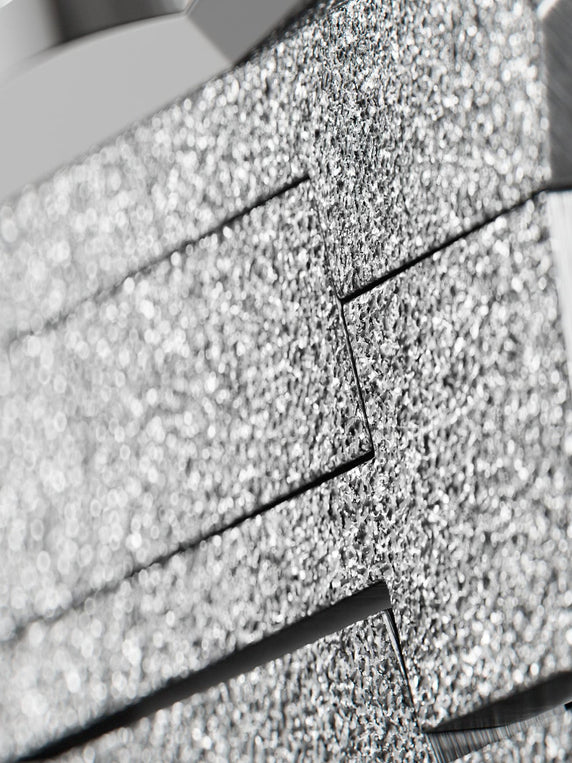
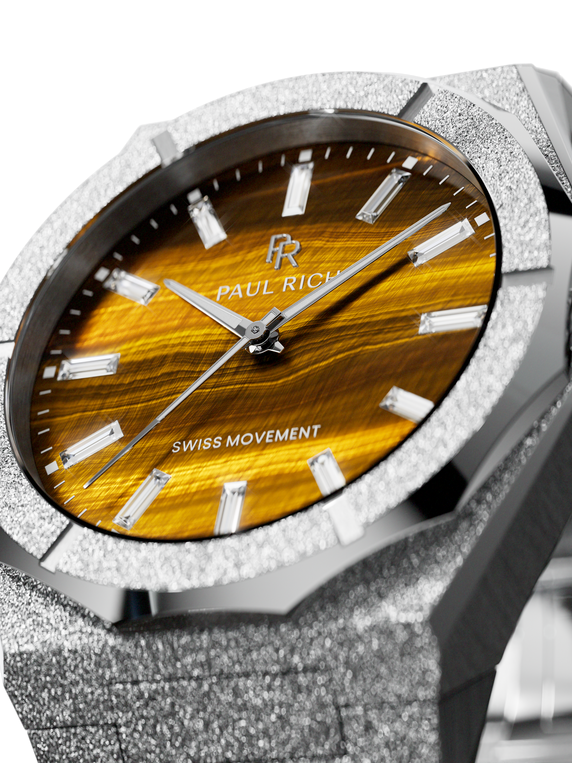
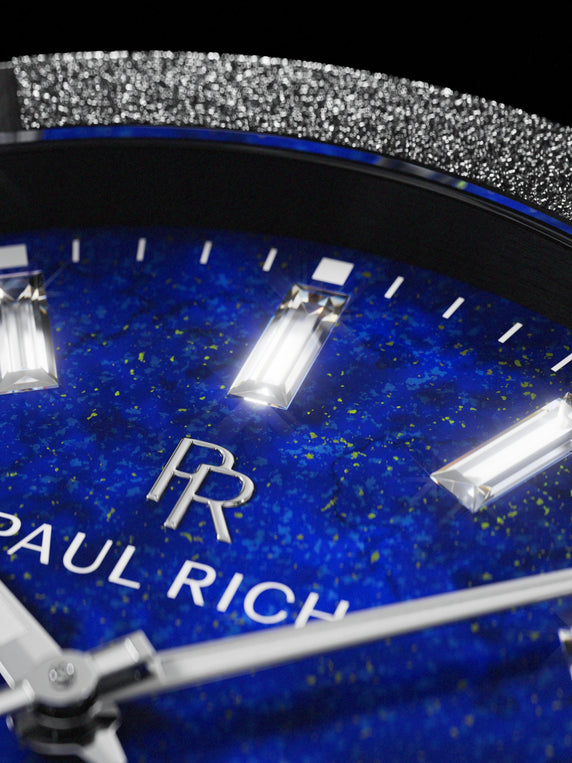
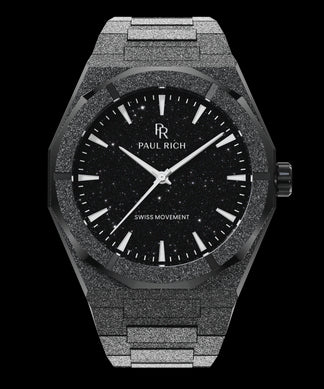
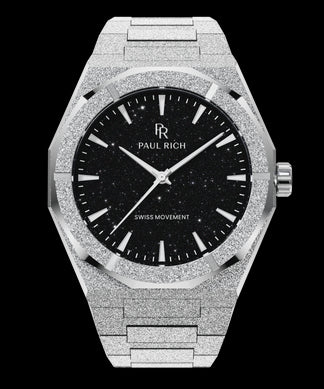
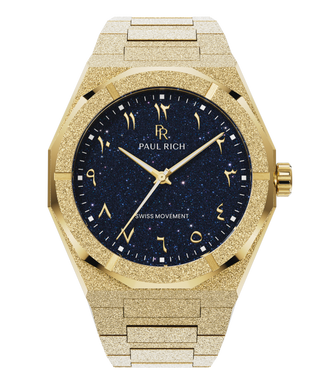
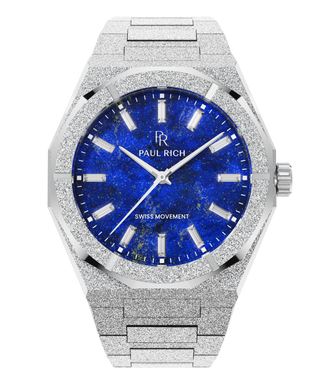
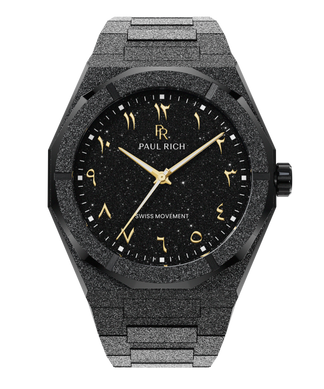
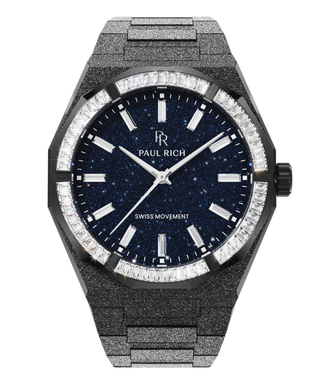
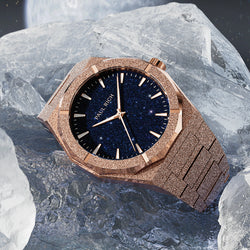
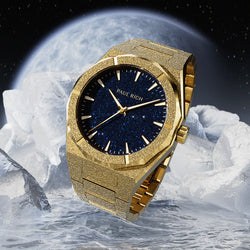
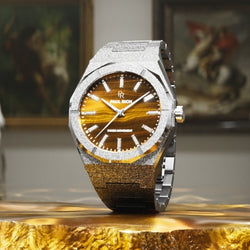
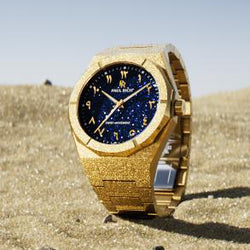
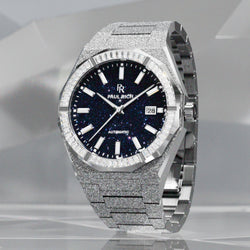
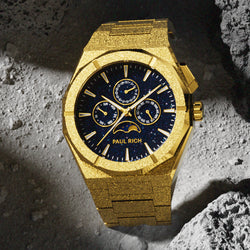
The Frosted Star Dust II runs on a stainless steel bracelet with a frosted finish — every link surface is diamond-cut to catch light the same way the case does. The bracelet design uses a fluid link system that balances visual impact with comfortable daily wear. The Iced Star Dust II takes the same base and adds cubic zirconia across polished bracelet links in pavé and baguette cuts.
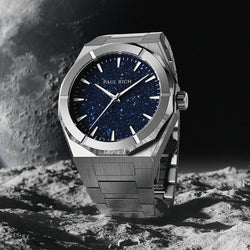
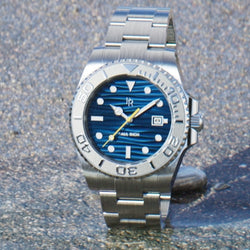
The Crystal Bay uses a brushed stainless steel oyster-style bracelet — three-link construction with a modern, sporty profile that matches its dive-inspired design. The brushed finish keeps the look clean and functional, and the overall weight gives it the presence of a serious daily watch.
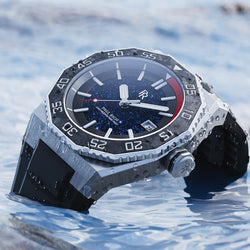
The Aquacarbon Pro goes with a premium rubber strap — the right call for a 200-meter dive watch. Rubber handles saltwater, chlorine, and sweat without degrading, and it keeps the weight down on a watch with a forged carbon fiber bezel that already carries plenty of visual density.
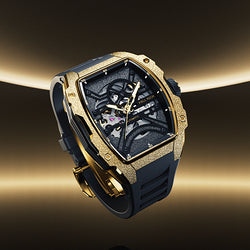
The Astro Skeleton and Diamond Astro Skeleton both use a soft silicone watchband with anti-static coating and deployant clasp. The tonneau case shape on the Astro would not work well with a traditional metal bracelet — the curved silicone strap follows the wrist contour naturally and keeps the skeleton dial as the focal point.
Each choice is driven by what the watch needs to do. A jubilee for versatile everyday presence. A frosted bracelet for maximum light play. An oyster for clean sport utility. Rubber and silicone for function-first performance. The bracelet is not an afterthought — it is part of the design.
Choosing the Right Bracelet Type
Start with how you actually wear watches. If you need one watch for everything, a jubilee or oyster covers the widest range. If you dress up regularly, a jubilee or president earns its keep. If you are active or spend time near water, rubber or silicone will outlast any metal option.
Then factor in comfort. Try different types on your actual wrist if possible — what looks best in photos does not always feel best in person. Pay attention to how the bracelet sits when you bend your wrist or type on a keyboard. Those are the positions your watch lives in, and the bracelet determines whether you notice it or forget it is there.
The best bracelet is the one you stop thinking about after ten minutes on the wrist. Everything else — the links, the finish, the style — is secondary to that.